Jaeger-LeCoultre Calibre 101 Chain: a rose gold jewellery watch
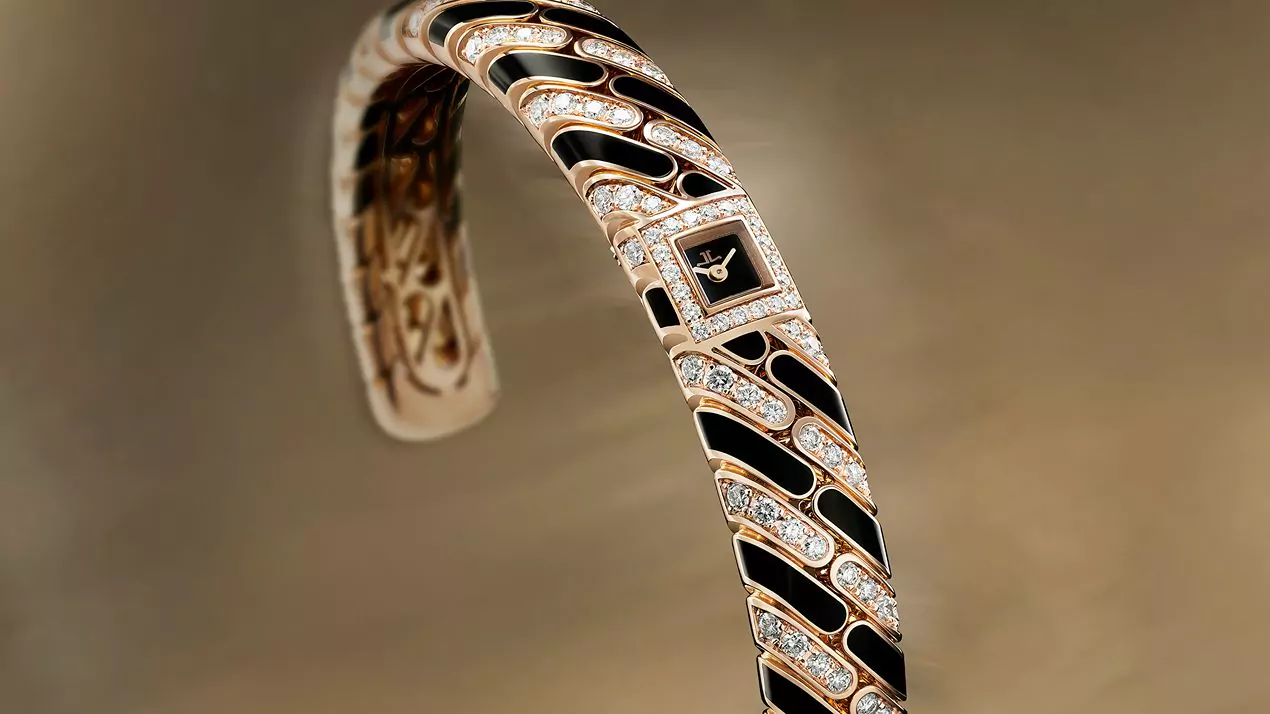
Jaeger-LeCoultre unveils the Calibre 101 Chain, a rose gold jewellery watch set with 158 diamonds and powered by the legendary Calibre 101.
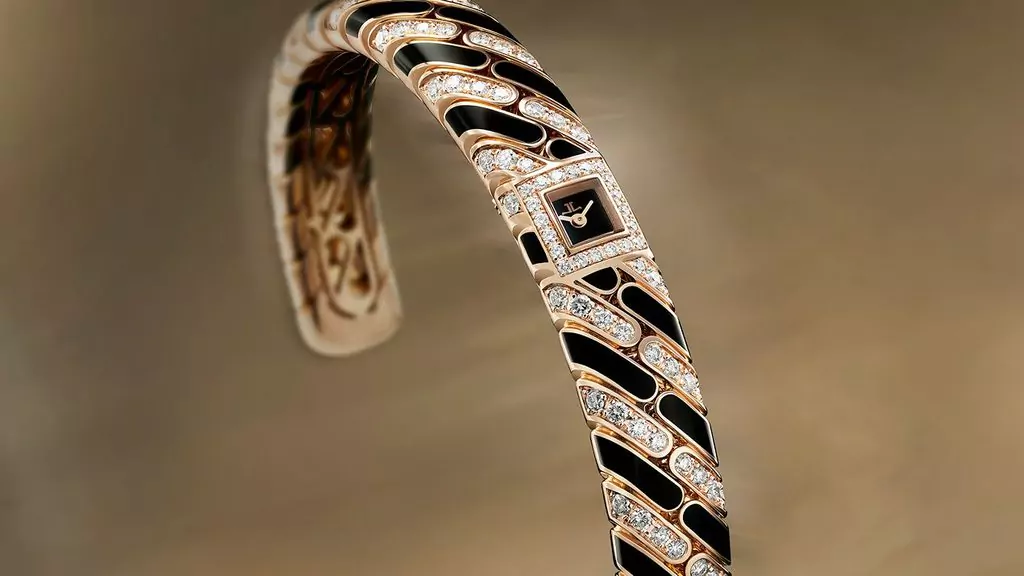
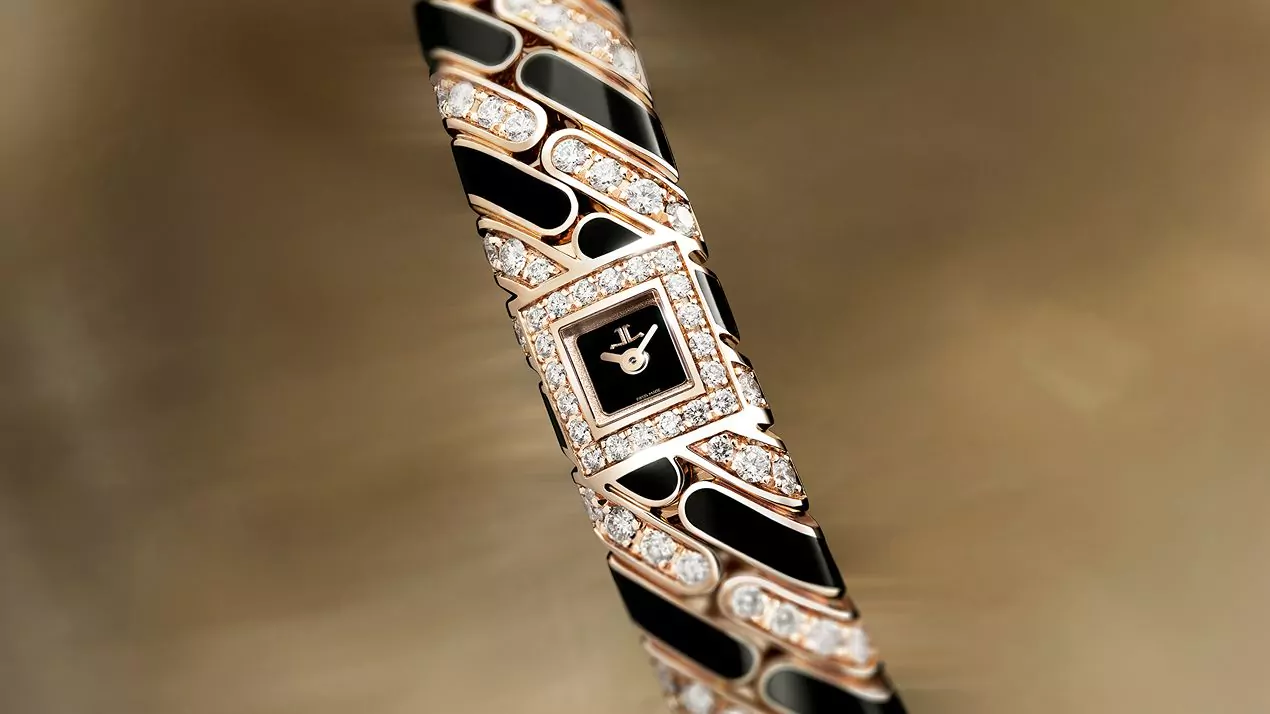
With the Calibre 101 Chain, Jaeger-LeCoultre unveils a fresh expression of its jewellery and watchmaking expertise. Driven by the iconic Calibre 101, regarded as the world’s smallest rectangular hand-wound mechanical movement, this singular creation takes the form of a sculptural bracelet in 18-carat (750/1000) rose gold. Its diagonal lines alternate brilliant-cut white diamonds with deep black HyCeram®, in a composition that turns the watch into a true piece of wrist jewellery.
On this page
- Calibre 101: nearly a century of excellence in miniaturisation
- An exceptional movement of extraordinary dimensions
- Calibre 101 Chain: when Haute Joaillerie inspires watch design
- Rose gold, HyCeram® and 158 diamonds: a goldsmith’s craft
- A jewellery watch with a singular identity
- Frequently asked questions
With this piece, the Grande Maison of the Vallée de Joux celebrates a particularly demanding union: that of Haute Horlogerie and Haute Joaillerie. It is a display of creativity made possible by a movement whose tiny dimensions have shaped nearly a century of watchmaking history.
Calibre 101: nearly a century of excellence in miniaturisation
The story of the Calibre 101 is inseparable from that of Jaeger-LeCoultre and its constant pursuit of miniaturisation. Ever since the first clocks were adapted to be worn on the person in the early 16th century, watchmaking has kept striving to shrink its mechanisms without compromising their robustness or reliability.
As early as the 19th century, the LeCoultre Manufacture stood out for its ability to design extremely small movements. Among its achievements were the LeCoultre 7HP calibre, launched in 1880 to power small enamelled and gem-set watches, and the LeCoultre 6EB calibre, unveiled in 1908, which measured barely more than one square centimetre.
A decisive new step came in 1925 with the invention of the Duoplan. This patented rectangular movement relies on a two-level architecture that considerably reduces the space required by the gear train. The escapement sits on one level, while the barrel and pinions occupy a second. The mainspring, for its part, is wound by means of a flat crown built into the caseback.
Four years later, in 1929, Jaeger-LeCoultre took this logic to its extreme with the Calibre 101. Heir to the Duoplan architecture, it became the absolute benchmark in the art of miniaturisation.
An exceptional movement of extraordinary dimensions
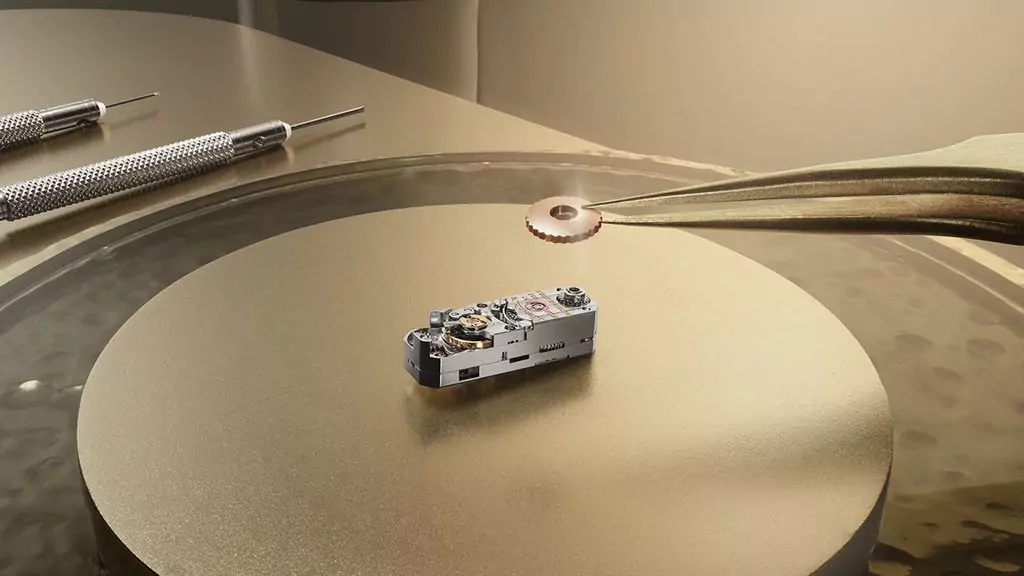
Measuring just 14 mm long, 4.8 mm wide and 3.4 mm thick, the Calibre 101 has a volume of 0.2 cm³. Within this tiny space, Jaeger-LeCoultre manages to fit a mechanism that today comprises 98 parts, weighing barely one gram.
It beats at 21,600 vibrations per hour, or 3 Hz, while its mainspring delivers a 33-hour power reserve. Remarkable performance for a movement whose architecture and dimensions have barely changed since it was created.
The current version is the fifth generation of the Calibre 101. While technological progress has improved the materials, the design of the gear trains and the manufacturing processes, the original architectural principle remains unchanged. Every component is made to measure and individually adjusted to meet the constraints imposed by this microscopic scale.
Assembly alone is a genuine challenge. Carried out in a specialised workshop by only a handful of master watchmakers, it demands exceptional dexterity and precision. Assembling the movement’s 98 components takes around 40 hours, which helps limit production to a few dozen pieces a year.
Nearly a century after its launch, the Calibre 101 therefore remains the world’s smallest rectangular hand-wound mechanical movement. It is also one of the oldest movements never to have gone out of production. Such exceptional longevity bears witness to the soundness of the Manufacture’s original vision.
Calibre 101 Chain: when Haute Joaillerie inspires watch design
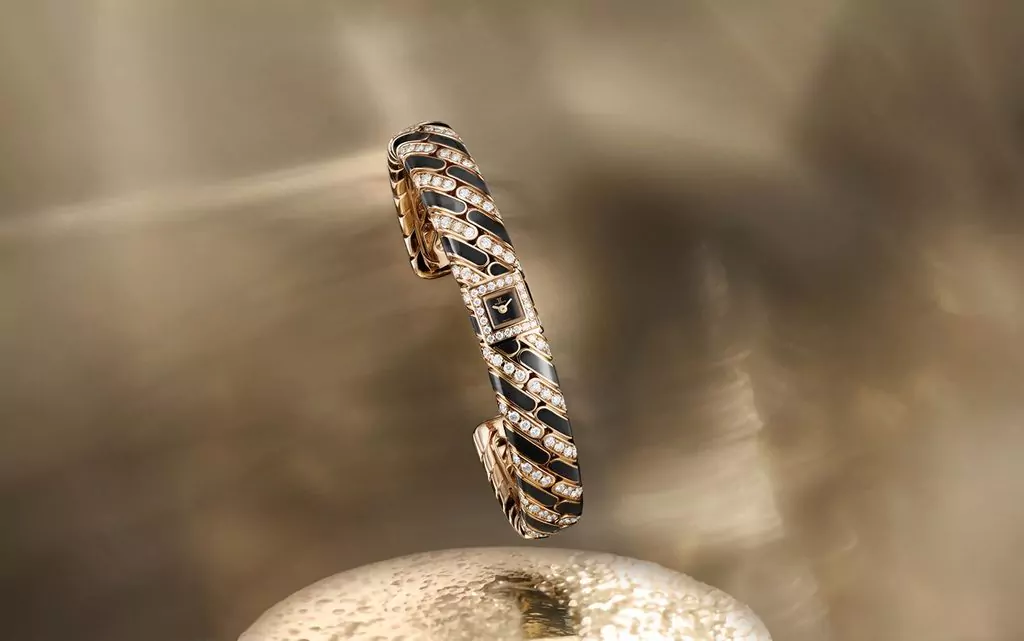
With the Calibre 101 Chain, Jaeger-LeCoultre takes this heritage in a new direction. The piece draws in particular on a 1955 Duoplan watch nicknamed « Chain », whose woven bracelet was made of heavy links in polished 18-carat (750/1000) rose gold. This historic reference now informs the sculptural details that adorn the sides of the new bracelet.
The creative process behind this watch stands out for its resolutely jewellery-led approach. Usually, designing a watch starts with the movement and the case, around which the other elements are then arranged. For the Calibre 101 Chain, Jaeger-LeCoultre’s Design department reversed that logic.
The shape of the bracelet, the gem-setting and the ornamentation guided the designers’ work. The case and movement were only integrated at the very end of the design process. It is an unusual approach that places aesthetic expression and the jewellery dimension at the heart of the project.
This creation required more than 300 hours of technical research and development. It pairs 18-carat (750/1000) rose gold with HyCeram®, a particularly glossy composite ceramic whose deep black contrasts with the sparkle of the diamonds.
Rose gold, HyCeram® and 158 diamonds: a goldsmith’s craft
Each Calibre 101 Chain is crafted in 18-carat (750/1000) rose gold from a unique mould created specifically for the piece. After casting, the bracelet undergoes meticulous decoration and finishing.
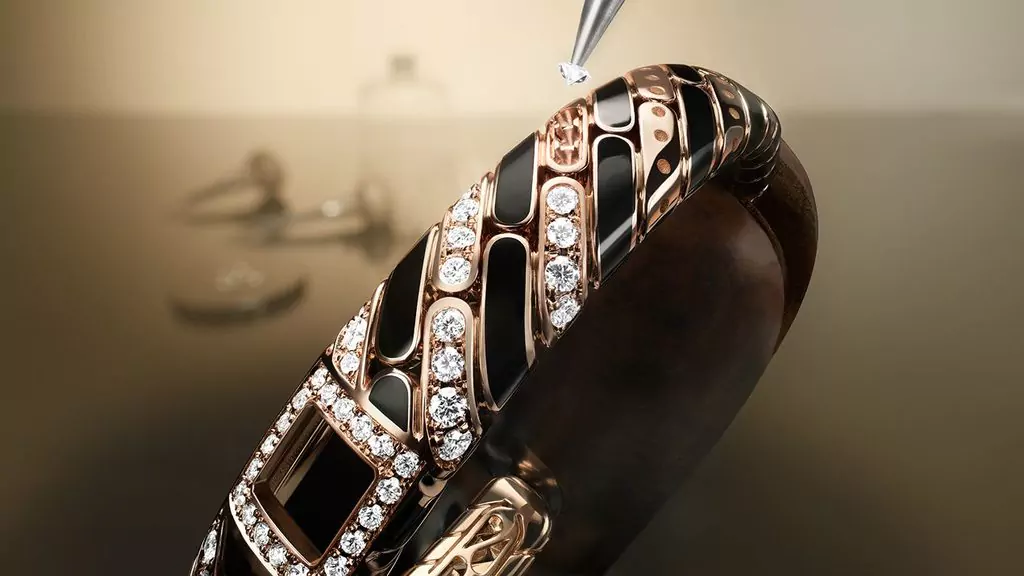
The settings for the diamonds are drilled with precision. Thirty-six cavities are then hollowed out and worked to obtain particularly fine, even edges. Liquid HyCeram® is then injected by hand with a syringe until its surface sits perfectly flush with the rose gold.
The material then goes through a carefully controlled drying process, particularly in terms of pressure and temperature. Finally, painstaking polishing reveals the depth of the black and its mirror-like gleam.
The work continues in Jaeger-LeCoultre’s Métiers Rares™ workshops. A master gem-setter hand-sets the 158 brilliant-cut diamonds that adorn the creation, for a total weight of around 2.73 carats.
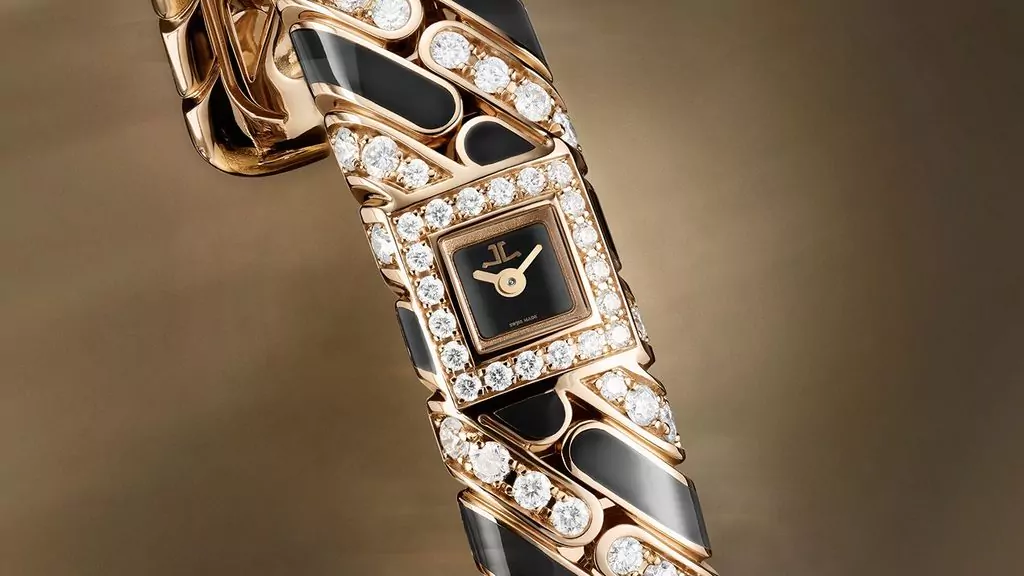
The small watch head, with its black lacquered dial and diamond-set bezel, is finally integrated into the bracelet. It completes this sculptural composition, in which the movement takes a back seat so that the jewellery craftsmanship can take centre stage.
A jewellery watch with a singular identity
The Calibre 101 Chain illustrates the creative freedom that such a small movement allows. By freeing up the space needed for an unusual aesthetic expression, the calibre becomes the technical heart of a creation whose bracelet is the true visual statement.
The alternating diagonal lines of rose gold, white diamonds and black HyCeram® create a particularly bold interplay of materials and light. The contrast between the depth of the composite ceramic and the brilliance of the precious stones underlines the sculptural character of this bracelet watch.
With this new creation, Jaeger-LeCoultre does more than showcase a historic movement. The Manufacture shows how its technical heritage can give rise to contemporary forms, at the crossroads of watch and jewel. The Calibre 101 Chain thus celebrates nearly a century of mechanical excellence through a daring jewellery interpretation, in which miniaturisation becomes a remarkable field of creative freedom.
Jaeger-LeCoultre Calibre 101 Chain
| Reference | Q2842270 |
|---|---|
| Case | 18-carat (750/1000) rose gold |
| Dimensions | 18.60 × 5.98 mm |
| Thickness | 6.75 mm |
| Movement | Calibre 101, hand-wound mechanical |
| Functions | hours and minutes |
| Frequency | 3 Hz, 21,600 vibrations per hour |
| Power reserve | 33 hours |
| Number of calibre components | 98 |
| Dial | black lacquered |
| Gemstones | 158 brilliant-cut diamonds, approx. 2.73 carats |
| Bracelet | 18-carat (750/1000) rose gold, HyCeram® and brilliant-cut diamonds |
| Wrist size | 160 to 165 mm |
Frequently asked questions
It is a jewellery watch in 18-carat (750/1000) rose gold whose sculptural bracelet alternates white diamonds and black HyCeram®. It is inspired by a 1955 Duoplan watch nicknamed « Chain », with a woven bracelet of rose gold links.
Launched in 1929, it is the world’s smallest rectangular hand-wound mechanical movement: 14 mm long, 4.8 mm wide and 3.4 mm thick, with 98 components and a weight of about one gram. It beats at 3 Hz and offers a 33-hour power reserve.
It is set with 158 brilliant-cut diamonds, for a total weight of around 2.73 carats, hand-set in the Manufacture’s Métiers Rares™ workshops.
The rose gold case measures 18.60 × 5.98 mm and is 6.75 mm thick, and the bracelet fits a wrist size of 160 to 165 mm. The reference is Q2842270.
It is a highly glossy composite ceramic in deep black. It is injected by hand with a syringe into 36 cavities hollowed out of the rose gold, then dried under controlled pressure and temperature and polished.