

With the Startimer Pilot Chronograph Automatic IFR, Alpina and Watch Angels deliver something rare in today’s world of pilot’s watches: a piece that does not simply borrow the visual codes of aviation, but sets out to restore the original purpose of the wrist instrument. Presented as a world first, this watch introduces a fully mechanical horological function that displays the entry paths into an IFR holding pattern, during a key phase of the instrument approach.
In this interview
- IFR, a continuation of Alpina’s aviation heritage
- A watch designed around a real procedure
- How Alpina and Watch Angels came together
- Startimer: the culmination of a regained legitimacy
- From an aviation procedure to a mechanical function
- Why the approach and the holding pattern
- The biggest challenge: precision, legibility or ease of learning
- Redundancy in the cockpit
- Making the instrument accessible to enthusiasts
- A new path for the mechanical pilot’s watch

Limited to 300 pieces, this creation rests on a strong idea: the pilot enters two pieces of information, the current heading and the inbound course, and instantly obtains the type of entry to fly, the headings to follow and the direction of the turn, left or right. It brings together the bidirectional bezel, the flange, the chronograph and the UTC indication in a design conceived as a genuine mechanical flight instrument.

To better understand the story behind this singular piece, Passion Horlogère spoke with Oliver Van Lanschot Hubrecht, Brand Director of Alpina, and Guido Benedini, CEO of Watch Angels. The former looks back at Alpina’s historical legitimacy in aviation and at the evolution of the Startimer collection. The latter explains how Watch Angels turned a complex aviation procedure into a mechanical function that is legible and usable on the wrist.
Over the course of this joint interview, the conversation covers heritage, usefulness, legibility and redundancy, as well as a possible future for the mechanical pilot’s watch. Behind this Startimer Pilot Chronograph Automatic IFR lies a fascinating question: can the aviation watch become something more than an aesthetic symbol again? Can it, in its own way, reclaim its place among the instruments that are genuinely useful to pilots?
Let’s meet them!

Passion Horlogère – Alpina has a long history with aviation. Why does this Startimer Pilot Chronograph Automatic IFR represent a natural continuation rather than a break?
Oliver – Alpina is one of the pioneers of aviation watchmaking. Our history with aviation goes back to the early decades of the 20th century, notably with our first pilot’s chronographs in the 1920s and 1930s. Since then, precision, legibility, robustness and reliability have remained at the heart of our approach.

In recent years, we have mainly evolved the aesthetic codes of our pilot’s watches, without any major functional change. With the Startimer Pilot Chronograph Automatic IFR, we are returning to what has always been Alpina’s strength: designing genuine instruments built to meet the needs of pilots.
The difference is that we are now taking a new step. For the first time, we are bringing to the wrist, in a fully mechanical way, an essential procedure of instrument flight, and in particular of the approach phase. The watch is therefore no longer merely inspired by the world of aviation: it becomes a truly functional tool for the pilot.
That is precisely what makes this piece a natural continuation of our history, while also being a major evolution for the Startimer collection.
Passion Horlogère – We are talking about a pilot’s watch that is no longer just inspired by aviation, but designed to address a real procedure. Was that the ambition from the very start of the project?
Guido – Yes, that was exactly our ambition from the start. We did not want to create a watch that simply borrows the aesthetic codes of aviation, but a genuine instrument capable of meeting a concrete need of the pilot.

Today, many pilot’s watches evoke aviation through their design, their legibility or their history. We wanted to go further and ask ourselves a very simple question: what mechanical function can still be truly useful to a pilot today?
That question guided the entire development. We started from the procedure and the operational need, before thinking about how mechanical watchmaking could provide an answer.
So the complication was not born of a desire to create a technical feat for its own sake. It was born of a desire to be useful. And that is precisely what makes this watch special: for the first time, mechanical watchmaking becomes a genuine tool supporting the pilot during a concrete phase of the flight.
Passion Horlogère – How did Alpina and Watch Angels come together around this very specific idea of entering an IFR holding pattern?
Guido – Watch Angels is both a watchmaking laboratory and a community of collectors, with the mission of creating watches that make sense, notably through collaborations with established brands. It was in this context that we began talking with Alpina, a brand with a real history in pilot’s watches that wanted to create something special, beyond yet another aesthetic interpretation of that heritage.
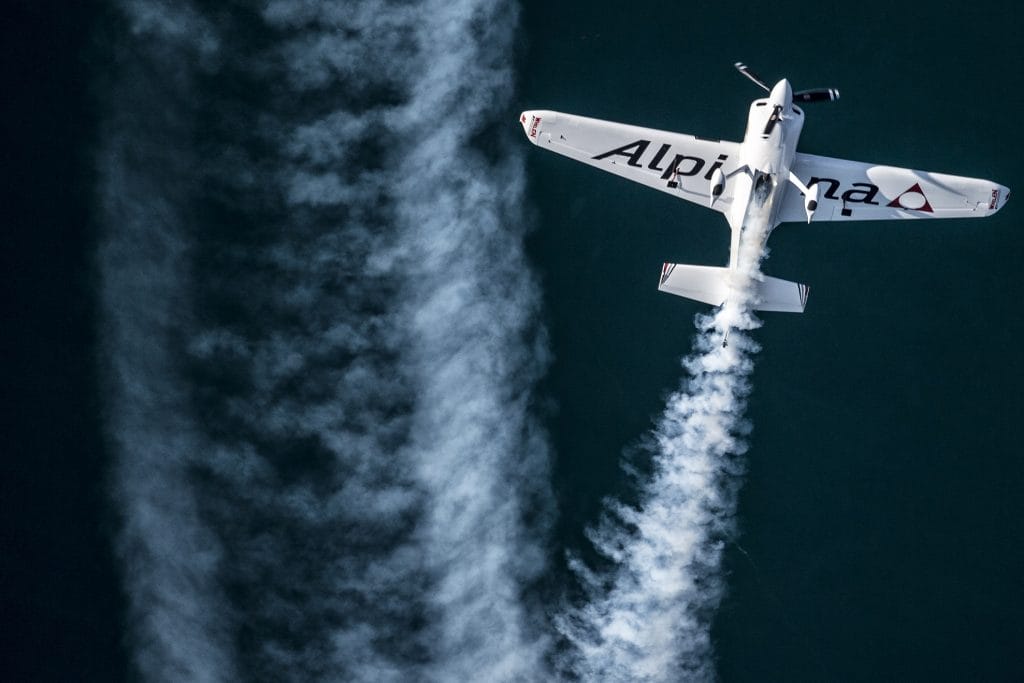
We then talked with pilots to find out whether modern aviation still had procedures to which a mechanical watch could bring something. It was during those conversations that they drew our attention to IFR procedures, and in particular to entering a holding pattern.
We studied this procedure and realised that its logic, the relationship between headings, a position and three possible types of entry, could be mechanised. That is really where the idea for the watch was born.
Building on this principle, we developed the functional concept, the design and the R&D of the watch and its functions at Watch Angels, in collaboration with Alpina, to create a piece fully consistent with the spirit of the Alpina Startimer Pilot collection.
Passion Horlogère – Alpina relaunched Startimer in 2003 to reconnect with its aviation heritage. Is this IFR complication today the most accomplished expression of that regained legitimacy?
Oliver – Since relaunching the Startimer collection in 2003, we have worked along two complementary lines: reviving Alpina’s aviation heritage through reinterpretations of historical pieces, while developing the collection with a more contemporary approach.
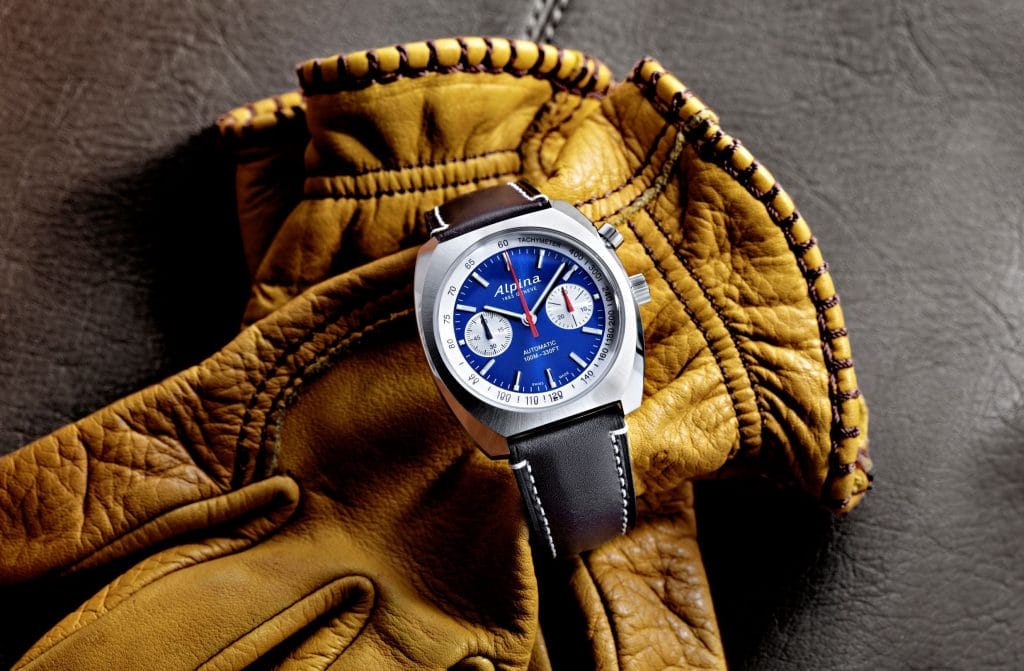
The Startimer Pilot Chronograph Automatic IFR fits squarely within that continuity, but it also opens a new chapter. For the first time, we are bringing to this heritage a technical innovation directly inspired by a real procedure of modern aviation.
But beyond the complication, it was essential for us that this watch should above all remain a beautiful Alpina. It had to be instantly recognisable as a Startimer Pilot, with genuine aesthetic coherence and a strong personality on the wrist.
Ultimately, that combination is what makes it strong: it celebrates Alpina’s aviation history while showing that this heritage can still be a source of innovation today.
Passion Horlogère – Watch Angels describes its approach as that of a watchmaking laboratory. How do you turn a complex aviation procedure into a mechanical function that can be read on a watch?
Guido – That is exactly where the project becomes particularly interesting. An aviation procedure is designed to be rigorous, not to become a watch complication. So you first have to understand its logic, then reduce it to its essential elements.

In our case, we broke the procedure down into a few fundamental pieces of information: the arrival heading, the holding pattern course and the relationship between the two. From this data, the watch identifies the type of entry, direct, parallel or teardrop, and indicates the corresponding headings.
The challenge was then to translate this logic mechanically in the simplest and most elegant way possible. We achieved this without modifying the movement: the entire IFR function is performed by the interaction of mechanical components integrated into the case construction. The intelligence of this complication therefore lies around the movement rather than inside it.

The choice of movement was also driven by the pilot’s needs. We wanted a chronograph, useful for timing and for certain in-flight calculations, as well as a UTC function, essential for time management in aviation. The idea was to design the watch as a whole as a genuine pilot’s instrument, not simply to add an IFR function to it.
For me, that sums up our philosophy quite well: start from the use, find the smartest mechanical solution, then make all that complexity simple for the person wearing the watch.
Passion Horlogère – Why did you choose this very particular phase of IFR flight, the approach and the holding pattern, rather than another aviation-related function?
Guido – Because it brought together several very interesting elements. It is a real procedure, still taught to pilots, which requires them to quickly understand their position relative to the holding pattern and determine the correct entry. It therefore combines a geometric dimension, a decision-making logic and the notion of heading. It was almost naturally “mechanical”.

We also really liked the idea that the pilot could work through the reasoning mentally, then use the watch to visualise or confirm it. The watch does not seek to replace the onboard instruments. It gives physical form to an aviation procedure in a mechanical object.
Passion Horlogère – The watch identifies a direct, parallel or teardrop entry, along with the corresponding headings. What was the biggest challenge: mechanical precision, legibility, or making it easy to learn?
Guido – Mechanical precision was of course indispensable, but the two main challenges were legibility and ease of use. In an aviation environment, a function only makes sense if it can be used quickly, simply and without ambiguity.

That is why we worked hard on reducing the interaction to the bare minimum. The pilot only has two parameters to enter: the current heading and the inbound course of the holding pattern. From these two pieces of information, the watch provides what is needed: the type of entry, direct, parallel or teardrop, as well as the corresponding headings to fly the procedure.
That was ultimately our goal: two inputs, an immediate reading of the procedure as the output. All the mechanical and geometric complexity had to disappear behind a simple, quick gesture.
Passion Horlogère – Alpina’s official messaging (in the press release) stresses that the watch does not replace onboard systems, but provides a form of redundancy. In aviation, that notion is essential. How did you build it into the way the product is presented?
Oliver – Through its mechanics and its functions, the watch is a tool a pilot can rely on at any moment. It is meant to be a true flight companion, complementing the onboard instruments rather than replacing them.

This notion of redundancy takes on its full meaning in certain situations, such as holding pattern entry procedures, which can be particularly stressful for a pilot. The watch allows the pilot to do the calculation mentally, then get immediate mechanical confirmation from its indications. It is this combination of reliability, simplicity and independence that strengthens its role as a backup tool and a trusted companion in the cockpit.
Passion Horlogère – This Startimer IFR is aimed at professional pilots, but also at collectors and aviation enthusiasts. How do you keep such a technical instrument from becoming too intimidating for the general public?
Oliver – The aesthetics of the Startimer IFR, combined with its technical development, naturally make it appealing well beyond the circle of professional pilots. As with many watch complications, their everyday usefulness may be relatively limited, but that is also what makes them interesting: they tell a story, express savoir-faire and bring an aesthetic and exclusive dimension to the watch.

Our goal is therefore to make this technology accessible and understandable, without oversimplifying it. In particular, we have developed various educational materials to explain how it works and allow everyone to appreciate its richness, even without being a pilot. In the end, you do not need to master the whole technology to be won over by the watch: you can first appreciate it for its aesthetics, its exclusivity and its connection with the world of aviation.
Passion Horlogère – Does this world first open a new path for mechanical pilot’s watches? Can we imagine other truly operational functions in the future, born of pilots’ needs?
Guido – I believe so, and it is probably the aspect of the project I find most exciting.
For a long time, pilot’s watchmaking innovated because pilots had real needs that a watch could meet. Then onboard instruments and electronics obviously took over, and the pilot’s watch gradually became more of a heritage object.
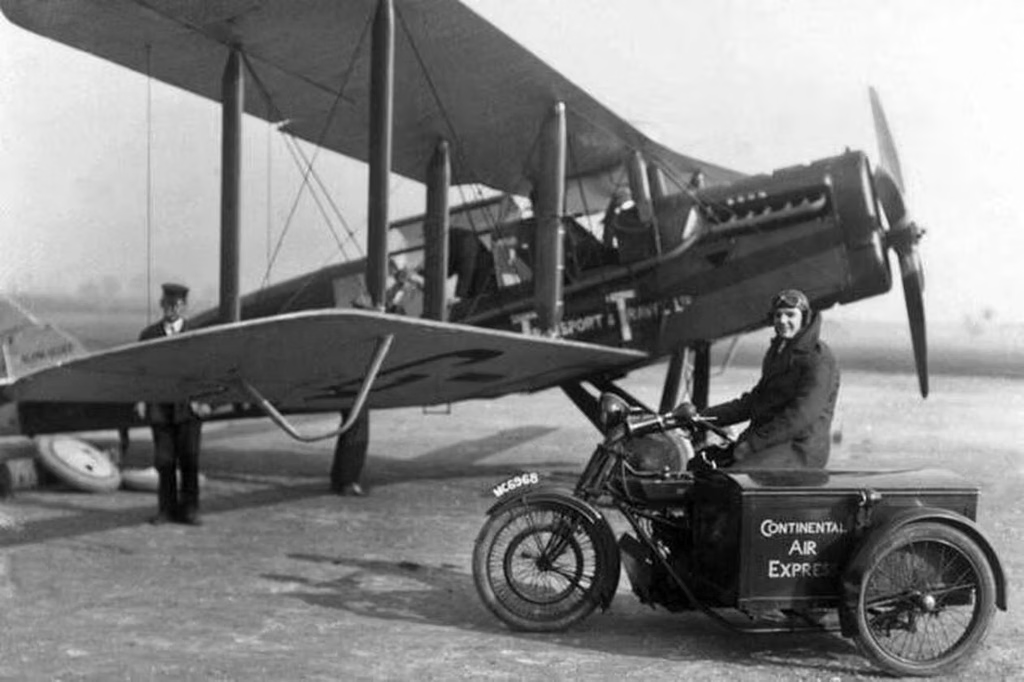
The question that interests us today is different: in modern aviation, are there still procedures, calculations or pieces of information that mechanics can interpret in a relevant and useful way? And if so, can a mechanical watch remain not only a beautiful object, but also a relevant backup instrument and an additional safety function for the pilot?
With the IFR, we are showing that this path exists. We did not develop this complication because it had a precedent in watchmaking history, but because an aviation procedure gave us a real reason to invent it.
Perhaps that is where the mechanical pilot’s watch can find new relevance: not by trying to replace onboard technology, but by complementing it with an autonomous mechanical instrument, always available on the wrist. And if we identify other needs in the future to which mechanics can provide a relevant answer, I am convinced we will keep exploring that path.

This interview gives a clearer picture of the real ambition shared by Alpina and Watch Angels. The Startimer Pilot Chronograph Automatic IFR is not just a spectacular novelty because of its principle or its status as a world first. Above all, it reflects a determination to give the mechanical pilot’s watch meaning again, by reconnecting it with a concrete need rooted in modern aviation.
Oliver Van Lanschot Hubrecht’s answers make it clear that Alpina does not see this piece as a break with its history, but as a natural continuation of its aviation heritage. A continuation that today takes a new form: a watch capable of bringing an essential instrument flight procedure to the wrist.
With Guido Benedini, the project reveals another dimension: mechanical watchmaking that does not try to compete with onboard systems, but offers an autonomous, immediate and complementary reading. The watch replaces nothing. It gives form to a procedure, supports the pilot’s reasoning and provides the kind of redundancy that is so valuable in aviation.
Perhaps that is where the real appeal of this Startimer IFR lies. It does not only look back to the glorious past of pilot’s watches. It opens a path for the future: autonomous mechanical instruments, designed not to replace onboard technology but to complement it intelligently. A path that Watch Angels and Alpina seem determined to explore.

Leave a Reply