

Nicolas Bos is a man of the arts, calm and composed by temperament, who joined the Richemont group in 1992. After a spell at the Fondation Cartier pour l’Art Contemporain, he soon moved to the house at 22 place Vendôme, where he climbed the ranks before taking the helm in 2013. Deeply imbued with the Van Cleef & Arpels philosophy, Nicolas Bos shares his inspirations with a contagious serenity that leaves everyone he speaks with under the spell of Pierre Arpels’ house. Make yourself comfortable…
On this page
- Hello Nicolas Bos, you are the president of Van Cleef & Arpels, and you are welcoming us today at the Salon International de la Haute Horlogerie. My first question concerns the philosophy of Van Cleef & Arpels. What sets the brand apart from the others today?
- Van Cleef & Arpels has historically been a jewellery house, and a watchmaking house too. Which watch are you wearing on your wrist today?
- Precisely, there is always poetry in your creations. People talk about poetic complications. Which is your finest complication?
- On a personal level, do you have passions other than watchmaking?
- Is there a person, living or no longer with us, who has personally inspired you in your life or your career? Perhaps among these artists, or among all the passions that drive you?
- How would you define luxury?
- And in your view, does Van Cleef & Arpels today fit this definition of luxury?
- With a heritage dimension?
- How many people does a house like Van Cleef & Arpels employ today?
- What qualities do you look for in your employees?
- Nicolas Bos, one last question. In the philosophy of Van Cleef & Arpels, what time is it?
Hello Nicolas Bos, you are the president of Van Cleef & Arpels, and you are welcoming us today at the Salon International de la Haute Horlogerie. My first question concerns the philosophy of Van Cleef & Arpels. What sets the brand apart from the others today?
I think that, like every major heritage brand, it has developed its own identity, its own philosophy and its own stylistic and technical signatures over the decades. What defines us, and what may set us apart in the context of a fair like this one, is that we are first and foremost a jewellery house in a world that, as presented here, is rather more about watchmaking. And being a jewellery house, we are a house where female clients, and inspirations connected with the feminine world, matter more than the masculine world.
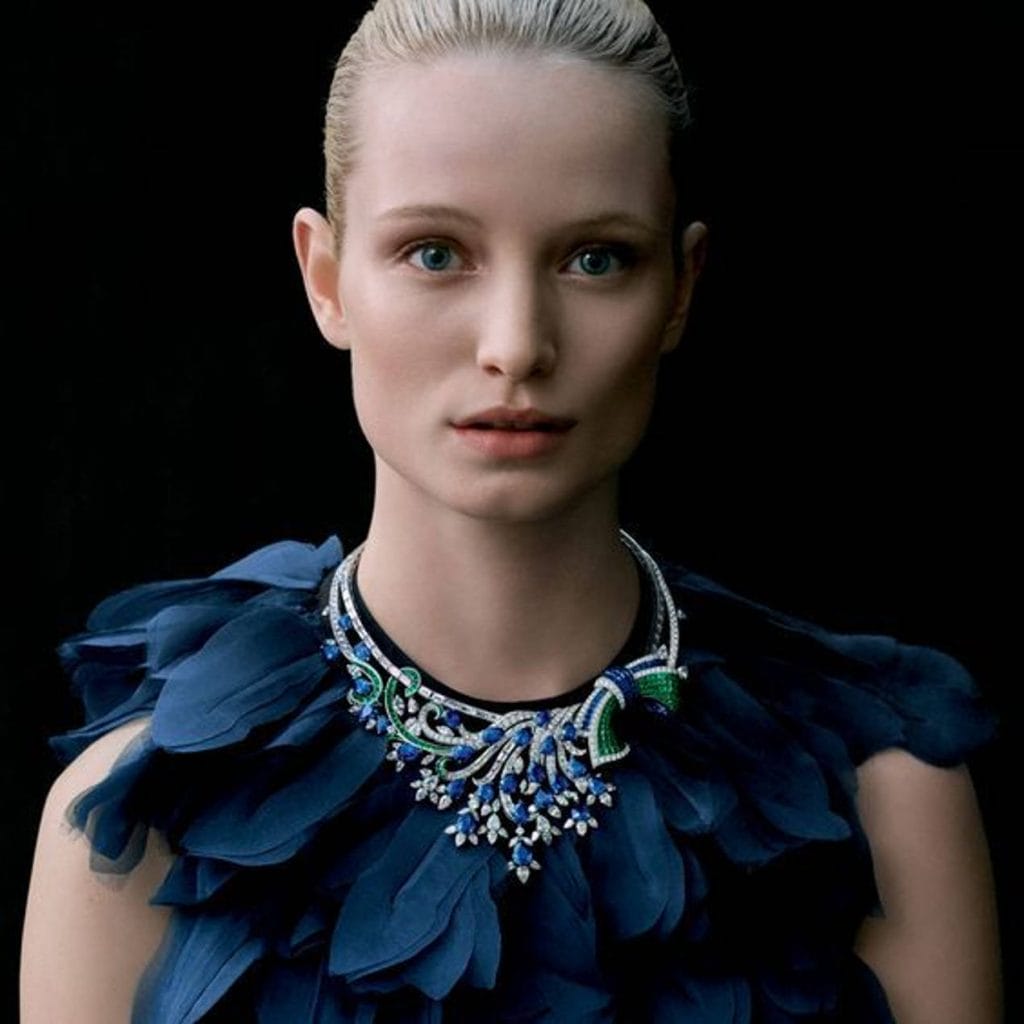
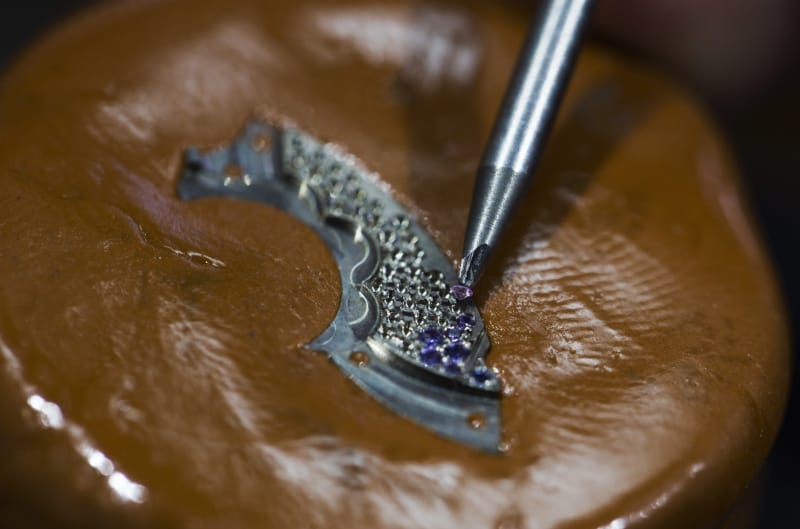
That is probably the biggest difference compared with most of our watchmaking colleagues and peers, who often develop a more masculine, more technical world, rooted more in watchmaking traditions than in jewellery traditions. Then, if we really look at the specific approach of Van Cleef & Arpels within that world, jewellery, a somewhat more feminine world, there are quite distinctive stylistic elements and sources of inspiration, such as the interpretation of nature. Historically, the house has produced many depictions of flowers, butterflies and leaves. We like to capture everything that speaks of movement, colour, fragility and lightness, and reinterpret it through our technical expertise in jewellery but also in watchmaking. Among our sources of inspiration you will also find a real attachment to stories, to storytelling, often to fairy tales, to the imagination. We like to draw on poetry, literature, theatre, travel… worlds and images that inspire our jewellery and watch collections and creations. Then there are elements of style and design, elements of craftsmanship and certain traditions, such as the Mystery Set technique when it comes to working with stones, coloured stones, and certain technical traditions, particularly in jewellery, that have gradually built the signature of the house.
Van Cleef & Arpels has historically been a jewellery house, and a watchmaking house too. Which watch are you wearing on your wrist today?
I am wearing a watch that we are currently launching and have just presented at the fair… A men’s watch, then, and we do not necessarily have many of those in the collection, as we mainly make women’s watches. But when it comes to watchmaking, we like to follow one of the traditions of the house: extremely simple, understated, elegant watchmaking, probably best embodied by a watch called the Pierre Arpels, designed by Pierre Arpels in 1949, a very, very simple and very, very understated watch. We try to reconcile that aesthetic with our work on movements that reinterpret the poetry of the house, which is often feminine but occasionally finds some resonance with the masculine world. This one is a dual time zone watch, so it belongs to one of the great traditions of watch complications, but we have interpreted it a little differently from what our colleagues usually do, with an extremely simple, extremely understated dial showing few indications. Just two apertures for jumping hours and a retrograde hand indicating the minutes. And the idea of travel, which lies at the heart of a dual time zone, is expressed by this little phrase: “time here and time elsewhere…”. You can see that it is a somewhat romantic and poetic take on the idea of travel.

Precisely, there is always poetry in your creations. People talk about poetic complications. Which is your finest complication?
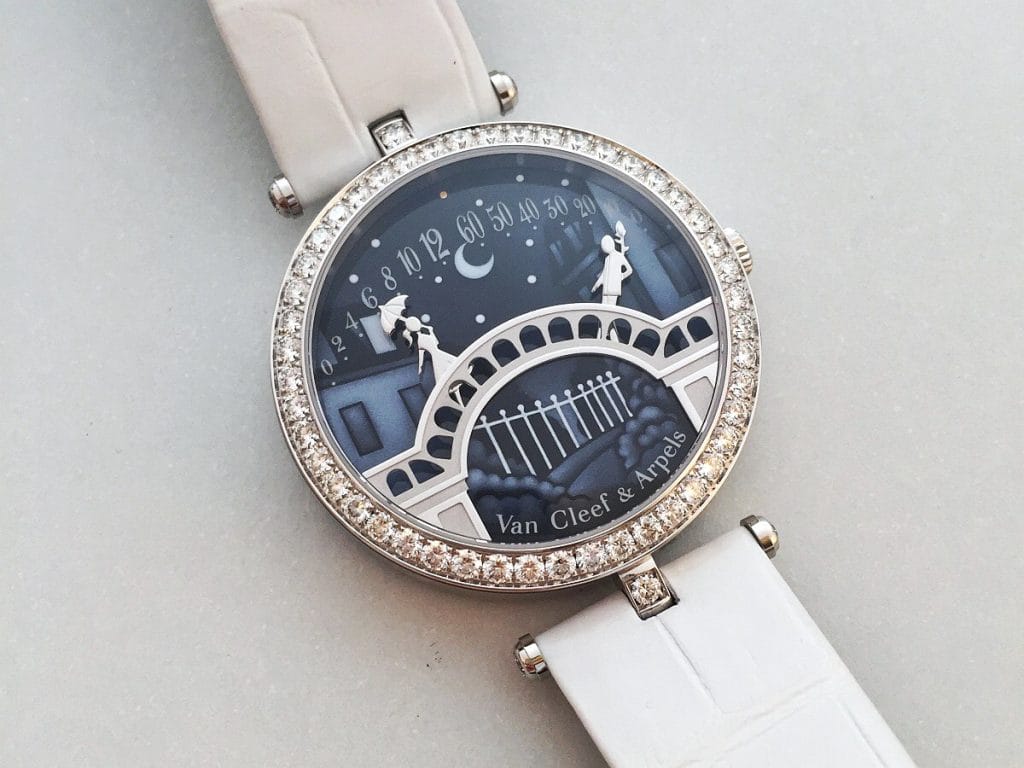
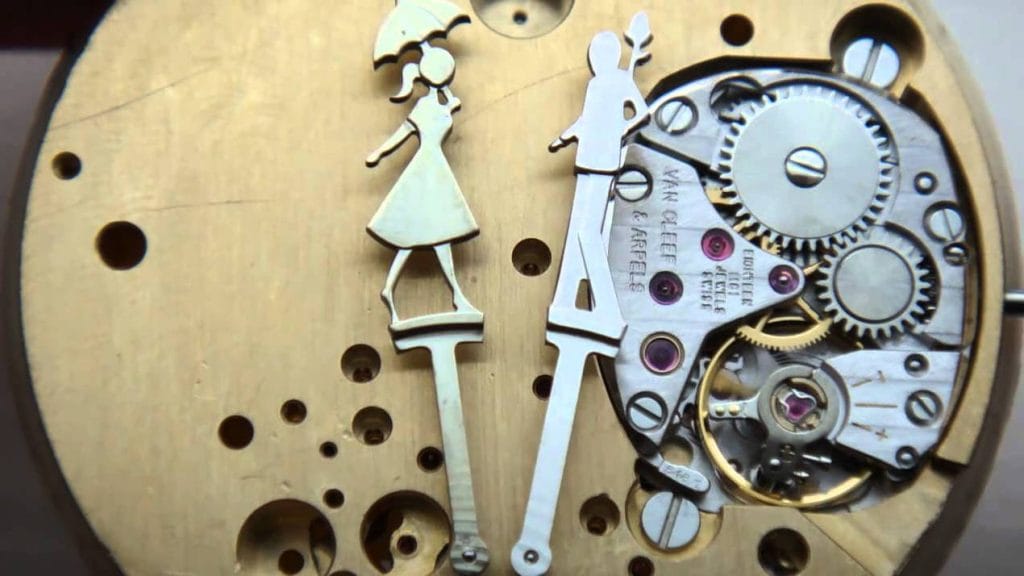
It is very hard to pick just one, because the whole idea behind poetic complications is really to use watch movements to tell stories, and very different stories at that. The one that is perhaps the most emblematic today is called “Le Pont des Amoureux” (the Lovers’ Bridge), because it is a very clear narrative interpreted in a very figurative way. It shows Paris by night, worked in grisaille enamel. There is a metal bridge with a man and a woman, presumably lovers, moving towards each other. As they draw closer, they indicate the hours and minutes through a retrograde system. I think this piece is probably the most symbolic, since it is a genuine timepiece that shows the hours and minutes, while fully embracing the idea of storytelling and something very romantic.
On a personal level, do you have passions other than watchmaking?
Yes, I love watchmaking (laughs), there is jewellery too… (laughs), many of them, but most are related to the arts or to culture. I have a great interest in dance, in literature, in art as well, contemporary art, and in the bridges between cultural disciplines. And with the teams, I also like to bring elements from all these discoveries, all these artistic and cultural enthusiasms, into the creative processes of the house.
Is there a person, living or no longer with us, who has personally inspired you in your life or your career? Perhaps among these artists, or among all the passions that drive you?
I have never really thought about it. There are people who, to me, truly embody benchmarks in their fields. One person who comes to mind, and who for once is not from the art world, belongs to a sister house, and I sadly never had the pleasure or the good fortune of meeting him: Jean-Louis Dumas. He was the president of Hermès, and everything I have heard about him, everything he did around the craftsmanship of his family house, but also the way he brought a taste for art, literature and surprise, and quite often a touch of humour to his approach, strikes me as very appealing. I think he is one of those great figures who helped build and develop the history of today’s craft houses, and he is something of a reference for me.
How would you define luxury?
Well, actually, I believe it was he who said that a luxury object is something that can be repaired. Perhaps those were not his exact words, but I find it a rather beautiful definition, because it describes something built to last, something you can always restore and repair, something with no obsolescence, to use a current term. That is a dimension I find quite appealing.
And in your view, does Van Cleef & Arpels today fit this definition of luxury?
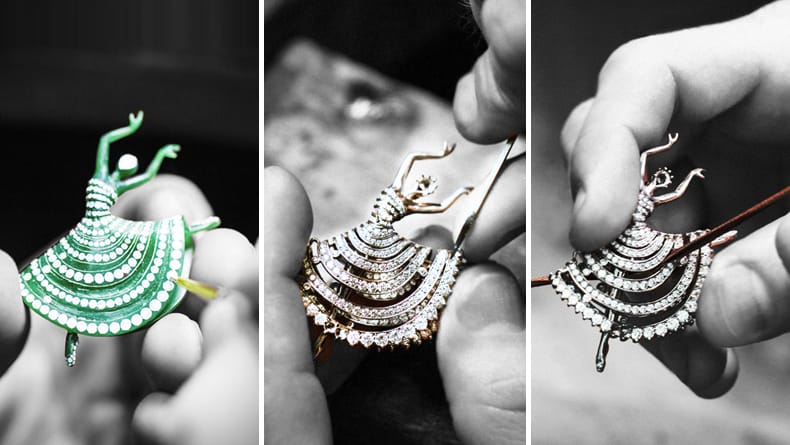
The pieces we create and develop fit that definition: jewellery and mechanical timepieces are, by their very nature, pieces that last. The materials are normally the most durable that exist, whether precious metals or stones… Mechanical watch movements can normally be repaired and kept alive. So yes, we really embrace that idea. And in the symbolism of jewellery, in any case, there is truly this idea of a kind of eternity. It is something that is handed down, something that outlives us, and that is part of the philosophy and the beauty of this craft.
With a heritage dimension?
Yes, inevitably, since there is this dimension of passing things on. There is value: we are talking about pieces that by their nature have value. The materials they are made of, but also all the symbolism, the hours, the work, create value, and it is a value that can be preserved and passed on. So yes, it becomes part of a personal or family heritage, and that is an important dimension.
How many people does a house like Van Cleef & Arpels employ today?
We are around 1,500 worldwide.
What qualities do you look for in your employees?
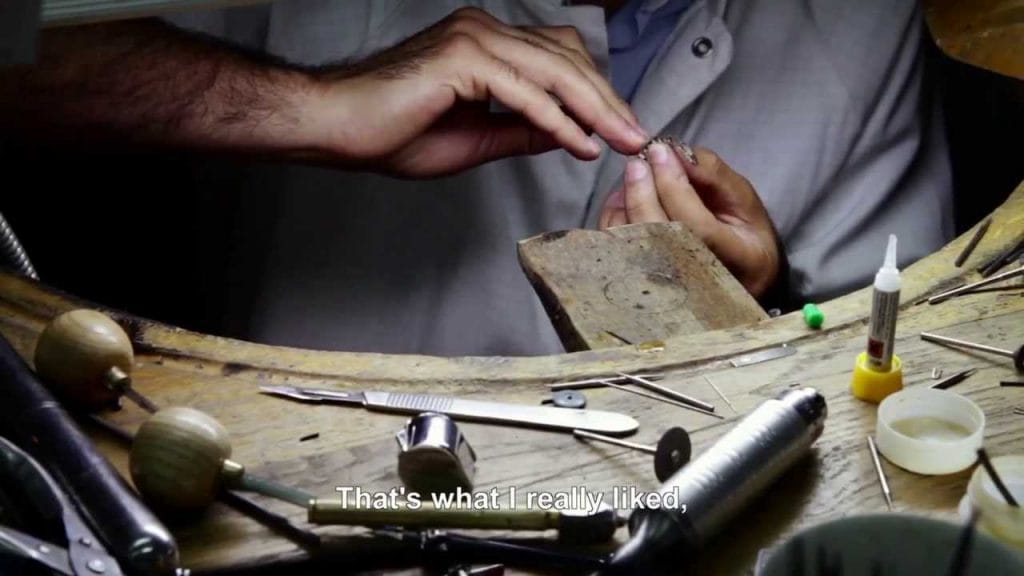
It is always difficult, and we work on it a lot, on values, but essentially we look for curiosity, for very high standards and a refusal to compromise, especially in the workshops and areas of expertise, but also in the teams in our boutiques. We also look for a certain collegiality and kindness. We believe these are strong values in the inspirations of the house, when we draw on nature or the various themes that feed our creations. There is always this idea of kindness, of a positive outlook on life, and that is something we also like to find in our teams.
Nicolas Bos, one last question. In the philosophy of Van Cleef & Arpels, what time is it?
Good question! Well, it would seem to be 4:40 pm! (Laughs).

Leave a Reply