

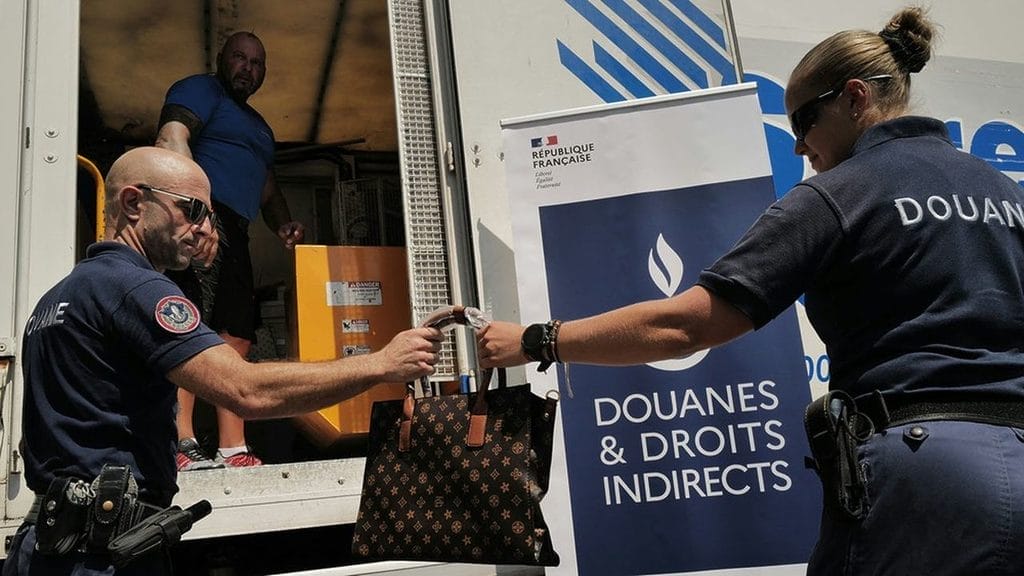
On this new day of hearings, the trial of the 8 defendants in the organised-gang watch counterfeiting case continues its very methodical course. After the adversarial statement of facts, we were able to attend the closing arguments of the civil parties, and now it is the turn of Customs (DGDDI), itself a civil party, to present its conclusions, through its prosecuting agent. The public prosecution’s requisitions will follow next. Selected highlights!
It was first a Customs officer who spoke to put forward his administration’s claims. “The case began with a parcel inspection. Two names were used for the same person, who came to collect parcels with fake identity cards. This person, Florian R., ultimately declared 20 watches a month and 50 doublettes. He also declared that he sourced them from Julien V., and directly from China. As far as Customs is concerned, this constitutes an offence of possession of goods deemed counterfeit under Article 215 of the Customs Code. On first request, this individual was required to provide supporting documents; failing that, under Article 419 of the Customs Code, the goods are deemed to have been smuggled in.”
“Mr Florian R. was arrested with 12 watches and stated that he had resold 300 via La Genèverie. Mr Florian V. stated that he had sold on 9,600 fake Rolex watches and 2,400 other counterfeit watches copying other brands. Also, under Article 392 of the Customs Code, both defendants fall under a presumption of liability, with the burden of proving good faith. The holder being the importer or the actual consignee. We are facing a case of reversal of the burden of proof. There is a guilty intent on the part of Julien V. that has been acknowledged and established. As for Florian R., he said he had used Julien V.’s services only once. This contradicts what the investigators have demonstrated.”
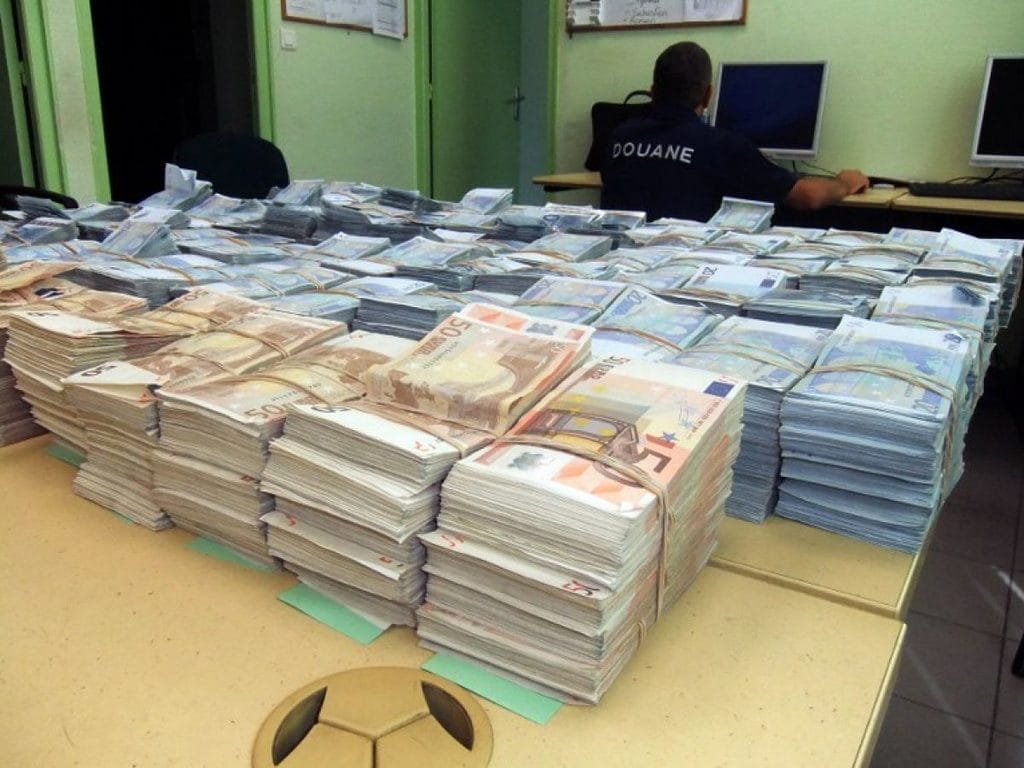
“Liability is therefore engaged under Article 392 of the Customs Code. The values and quantities at stake are extraordinary. The fine will be based on the value of the genuine goods that were counterfeited. This is for a deterrent effect and pursuant to several rulings dating from 2010, 2012, etc. For Mr Florian R., following the investigation, we can establish a minimum of 240 watches, plus the 50 doublettes, plus the seized watches. This corresponds to a value of €3,000,000 plus €108,600 for the seized watches. When we compare this with the review of his bank accounts and the elements of the customs investigation, we find that in 13 days he received 12 watches. This corroborates the figure of 20 watches per month.”
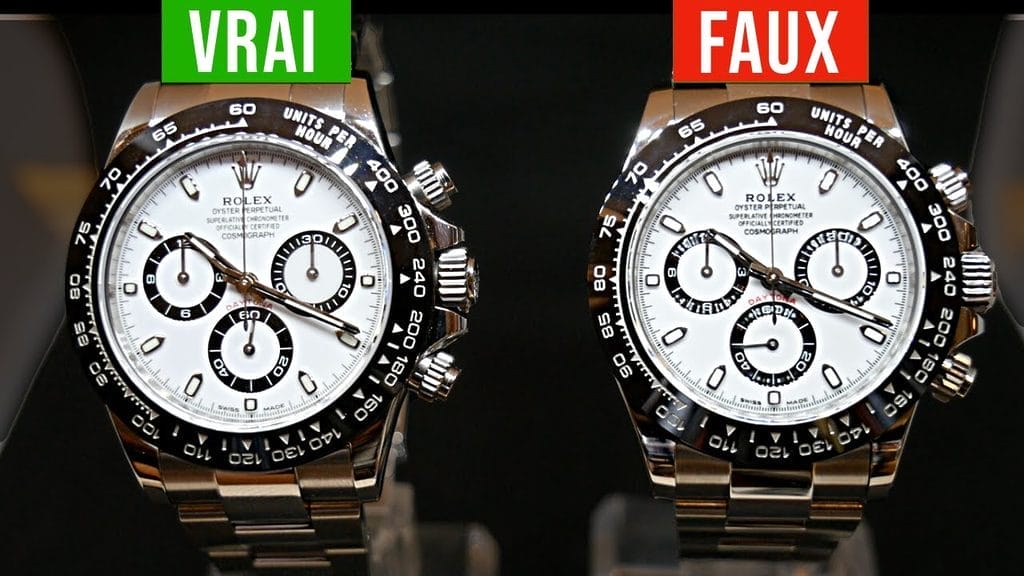
“For Julien V., we have a declaration of 200 Rolex Daytona doublettes sold to Florian R. But regarding his trafficking, we have something far more significant. Based on his declarations of 12,000 watches sold, 80% of which counterfeited the Rolex brand and 20% counterfeiting other luxury brands, we established an average price that allowed us to arrive at a total value of €354 million.”
“Under Article 369 of the Customs Code, the Court may reduce the amount of the fine according to the scale and seriousness of the fraud committed, as noted in a Court of Cassation ruling dated 7 February 2024. This penalty must be joint and several, under Article 406 of the Customs Code, although Customs will request that it be limited according to the harm caused. We therefore ask the Court to find Mr Florian R. and Mr Julien V. guilty and to sentence them to pay €354,571,500, limiting Mr Florian R.’s fine to €3,108,600. This to be accompanied by the seizure of the fraudulent goods.”
After this successive escalation in legal and technical intensity from the various civil parties, we arrive at the essential point of any trial: the public prosecution’s requisitions.
The Parquet, also referred to as the public prosecution (Ministère Public), takes part in a trial to represent the interests of Society. These are magistrates, the only ones who are subordinate to the Minister of Justice. And through their requisitions, one can, by extrapolation, grasp the criminal policy of the Government in power.
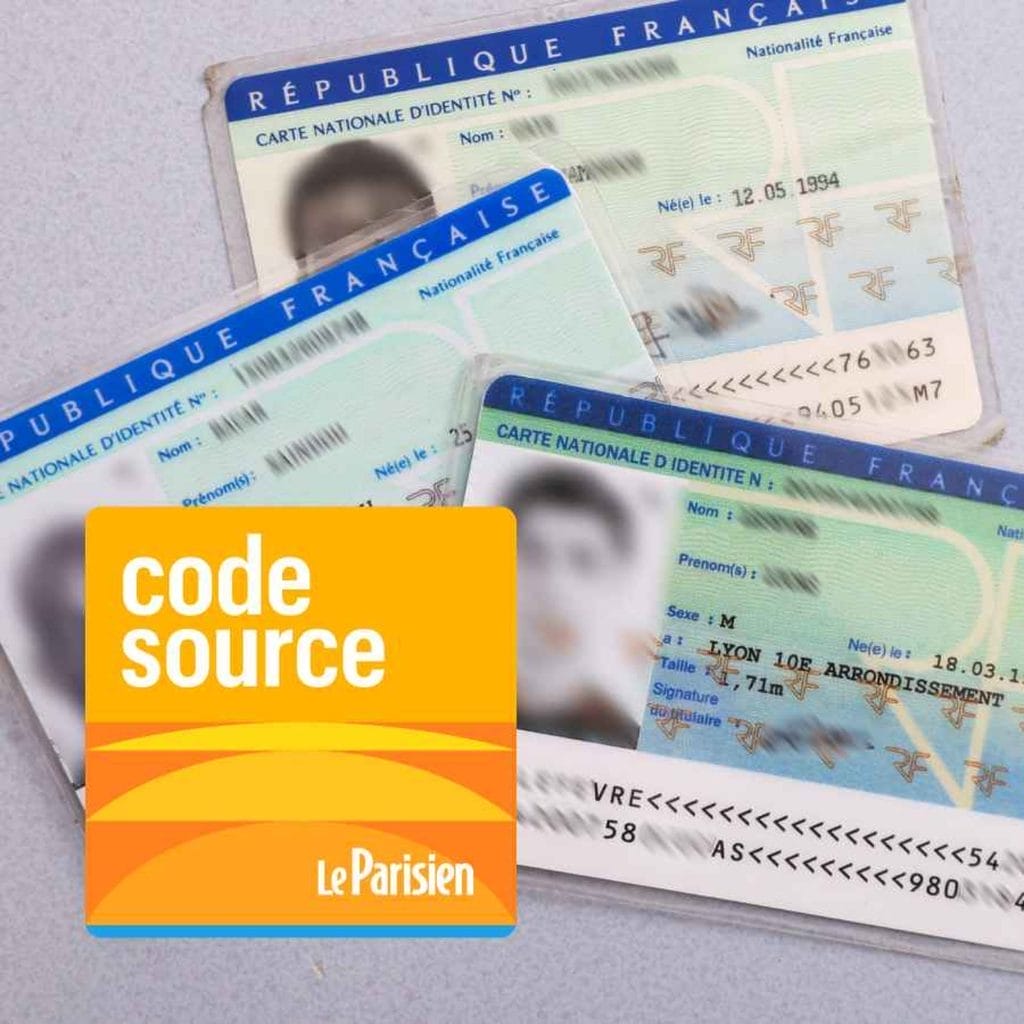
The public prosecutor began his requisitions with the “Volrys” segment, described as the “King of fake papers”. This famous Volrys, whose Geneverie was used by Florian R. among many other clients. We will not dwell on this segment, however important it may be, as it does not concern horology, our main interest. But if you would like to know more, we recommend listening to “Code Source“, a podcast from the daily newspaper “Le Parisien”. We will note, however, that 6 years in prison were requested against him, including 4 years without suspension accompanied by an immediate custody order (committal to detention immediately following sentencing by the Court, Ed.). After the requisitions, Volrys’s lawyer judged the public prosecution’s request to be utterly absurd, pointing out that at the Paris Assizes a man had just been sentenced to 6 years in prison for incestuous rape…
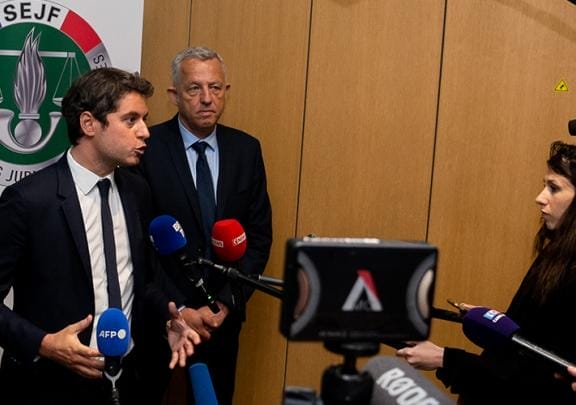
The public prosecution’s requisitions surprised those present at the trial. As the public prosecutor set out his argument, it was not uncommon to see people trying to catch each other’s eye, as if to share a moment of astonishment, unease, or complicity. A certain form of “cringe” (Le Petit Robert 2023, Ed.) swept through the 13th criminal division (13ème chambre correctionnelle) of the Paris Judicial Court (Tribunal Judiciaire de Paris). The lead prosecutor compared this case to the solar system, where the sun would be the fraud, and each of the defendants a planet in that system, closer or further from the sun, that is, from the fraud. Well argued, this could have been an interesting metaphor, but presented with such unconvincing reasoning that an insolent teenager would no doubt have called it “an absolute flop”! It was quite something! We therefore choose to give you only the most relevant, technical passages, related to the case. We leave astronomy to the astronomers…

“Julien V. always wanted to shine. He showed off his wealth and did not use any system to anonymise himself (unlike Volrys, whose requisitions preceded his, Ed.). He showed everything, and even at the hearing he claimed to be holding back revelations for the press. At the time of his arrest he heavily insulted the investigators, then, the next day, he cooperated. He behaved inappropriately at the hearing. However, he admitted to 4 years of trafficking counterfeit watches. He had an arrangement with Zen in China for the preparation of parcels, which travelled via the Chinese postal service then the French postal service. He had 38 approved resellers, including Florian R. “Thousands and thousands” of watches sold, according to his own words, which seems consistent. He declared 12,000, of which 80% were fake Rolex.”

“The watches are imitations sold to customers who knew they were counterfeits. But the case file does not establish that they were subsequently resold as genuine. We are therefore dealing with possession and sale of counterfeit goods as an organised gang, money laundering, and a criminal conspiracy. It should be noted that Julien V. ceased all activity in November 2022 when he was arrested.”
“This network was out of the ordinary. The proceeds run into the millions, even tens of millions. Had he been cooperative, had the criminal assets been returned, the sentence requested would have reflected that. But his defiant attitude amplifies the disturbance created by his activity.”

“For all of this, the public prosecution requests 4 years in prison, including 18 months without suspension (12 months have already been served in pre-trial detention, so he could be released tomorrow with an electronic tag, Ed.), and 30 months of probationary suspended sentence. We request a €750,000 fine, a ban on managing a business for 10 years, and a ban on leaving the country for a period to be determined by the Court. We wish to point out that Julien V.’s fraud only caused harm to the brands, and not a disturbance to public order (unlike Volrys and Florian R., it is implied, Ed.).”
Then it is the turn of the Florian R. case.
“Florian R. is the one who caused the most disturbance to public order,” announces the public prosecutor. He goes on to explain: “Because he corrupted police officers (for database checks, Ed.). He is at the centre of this organised gang. He made revelations (about the money, to the press, Ed.). He has acknowledged what is in the case file, but some is missing because he destroyed his computer files. He had 24 bank accounts with €82,000, €19,000, €21,000 and 331,000 UDP in cryptocurrency seized. He is guilty of 14 offences.”

“Against Florian R. we request a €150,000 fine, 6 years in prison with a minimum term of two-thirds of the sentence, i.e. 4 years, a ban on managing a business for 10 years, and that he remain in detention.”
“Finally, the public prosecution wishes to congratulate the investigating services for the quality of their work, and because it is rather rare to have so many of them working so well together.”
The hearing ends with the closing arguments of the lawyers for 5 defendants who are appearing over the trafficking of fake papers. All of them will attack the public prosecution over its astral metaphor, which they will seek to ridicule. The lawyers for the allegedly corrupt police officers will attack the fact that the public prosecutor described this corruption by “rank-and-file officers” as the most damaging to Society, arguing that corruption involving a minister or a President of the Republic would be far more significant. We witnessed genuine clashes, far more combative than the interventions of the civil parties’ lawyers. This hearing was of great quality and would have interested any law student wishing to witness a textbook case.
We look forward to seeing you again in our pages for the closing argument of Florian R.’s lawyer and, of course, for the verdict. For it is important to note that only the Court will have the final word, and it is not obliged to follow either the lawyers’ requests or the public prosecution’s requisitions.
Frequently asked questions
Customs asked the Court to find both men guilty and order a joint fine of €354,571,500, with Florian R.’s fine limited to €3,108,600, together with seizure of the fraudulent goods.
The public prosecution requested 4 years in prison, including 18 months without suspension, 30 months of probationary suspended sentence, a €750,000 fine, and a 10-year ban on managing a business.
Because he corrupted police officers for database checks, was at the centre of the organised gang, and made revelations about the money to the press.
A €150,000 fine, 6 years in prison with a minimum term of two-thirds of the sentence (4 years), a 10-year ban on managing a business, and his continued detention.
Volrys, described as the “King of fake papers,” supplied Florian R.’s Geneverie among many other clients; the public prosecution requested 6 years in prison against him, including 4 years without suspension with an immediate custody order.
- Part 1: Setting the scene
- Part 2: Chronology of the facts
- Part 3: Getting to the heart of the matter
- Part 4: The hidden money
- Part 5: The Punch and Judy show
- Part 6: A calmer hearing
- Part 7: Rolex’s conclusions
- Part 8: Material and moral harm to the brands
- Part 9: Customs and the public prosecution step in ←
- Part 10: The defence’s pleading
- Part 11: The verdict (208 million euro)

Leave a Reply