

After two weeks of trial, we reach the conclusions and the verdict of the Paris Judicial Court (Tribunal Judiciaire de Paris). Selected highlights from this final hearing, reporting on the Court’s deliberations.
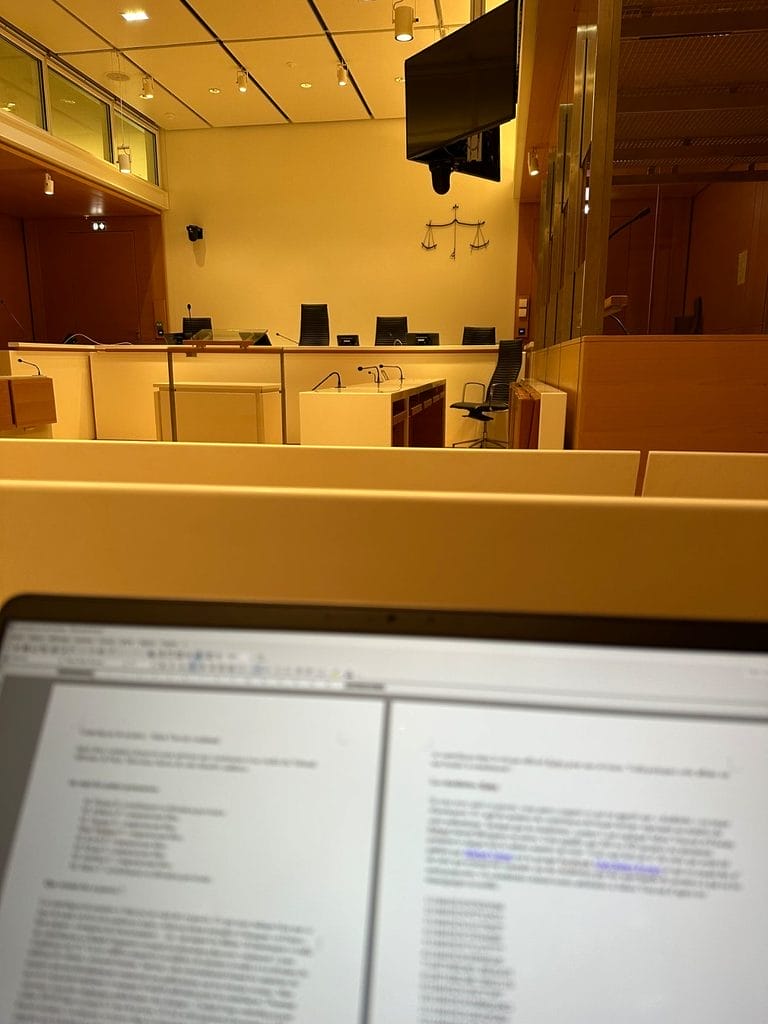
Julien VINCENT and Florian REBANI are both present in the dock, as they currently appear from detention. They arrived smiling, Julien behind his gradient-tinted glasses, and Florian chatting with his lawyer. The opening of the hearing was delayed, and the Court is packed to capacity. When the presiding judge opens the hearing, he begins, as a preliminary matter, with the presentation of the charges that were upheld or dismissed. Regarding the forged documents, he states that the organised-gang circumstance was not upheld, on the grounds that there may have been arrangements but no lasting organisation and no hierarchy. The same applies to the fraudulent consultation of files by corrupt police officers.

On the other hand, the organised-gang circumstance is firmly established with regard to the trafficking of watches and jewellery. This is because there are clearly identified suppliers in China, one of whom was the subject of a raid by the Chinese police. In addition, there was a parcel-preparation team in China, influencers in Dubai, and a photographer employed in Thailand. And Florian REBANI, as a mere link in this organised gang, is himself also part of it. This aggravating circumstance is therefore upheld against him as well.
Another piece of information that also carries weight, and which could well set a precedent for future similar cases, is that, in the Court’s view, assembling a watch from authentic parts gathered from various sources is likewise considered counterfeiting. This applies in particular to the case of a Patek Philippe Nautilus 5711 assembled by Julien VINCENT using authentic components he had purchased for €40,000 and then resold for €65,000. For the Court, this still constitutes counterfeiting, given that the brand name appears on the dial of the watch sold.
Finally, the presiding judge reads out Article 132-1 of the Criminal Code, which can be summarised as follows: “Within the limits set by law, the court determines the nature, extent and regime of the sentences handed down according to the circumstances of the offence and the personality of its perpetrator, as well as his material, family and social situation, in accordance with the purposes and functions of sentencing set out in Article 130-1.“
On this page
On the sentences handed down
As mentioned in a previous article, we only disclose the names of individuals in the event of a sentence exceeding 2 years in prison, in keeping with the journalistic ethics to which we adhere.
- Mr Yassine G., appearing at liberty, is found guilty and sentenced to 2 years in prison, 1 year of which is suspended. The year of firm imprisonment benefits from a sentence adjustment to home detention under electronic monitoring (DDSE) (i.e. an electronic tag – Ed.)
- Ms Séphora OUAHAB, appearing at liberty, is found guilty and sentenced to 4 years in prison, 2 years of which are suspended.
- Mr Kevin P., appearing at liberty, is found guilty and sentenced to 18 months in prison, 12 months of which are suspended. Because of a previous sentence, he has a 3-month suspended sentence that is revoked, which means he will have to serve 9 months under DDSE.
- Mr Karim SOUMALI, appearing at liberty, is found guilty and sentenced to 4 years in prison, 2 years of which are suspended with a 3-year probationary period.
- Mr Anthony PELLETIER, appearing at liberty, is found guilty and sentenced to 5 years in prison, 44 months of which are suspended. Since he has already served 4 months of pre-trial detention, he has 12 months left to serve, adjustable under DDSE.
- Mr Aurélien C., appearing at liberty, is found guilty and sentenced to 2 years in prison, 1 year of which is suspended. The year of firm imprisonment is adjustable under DDSE.
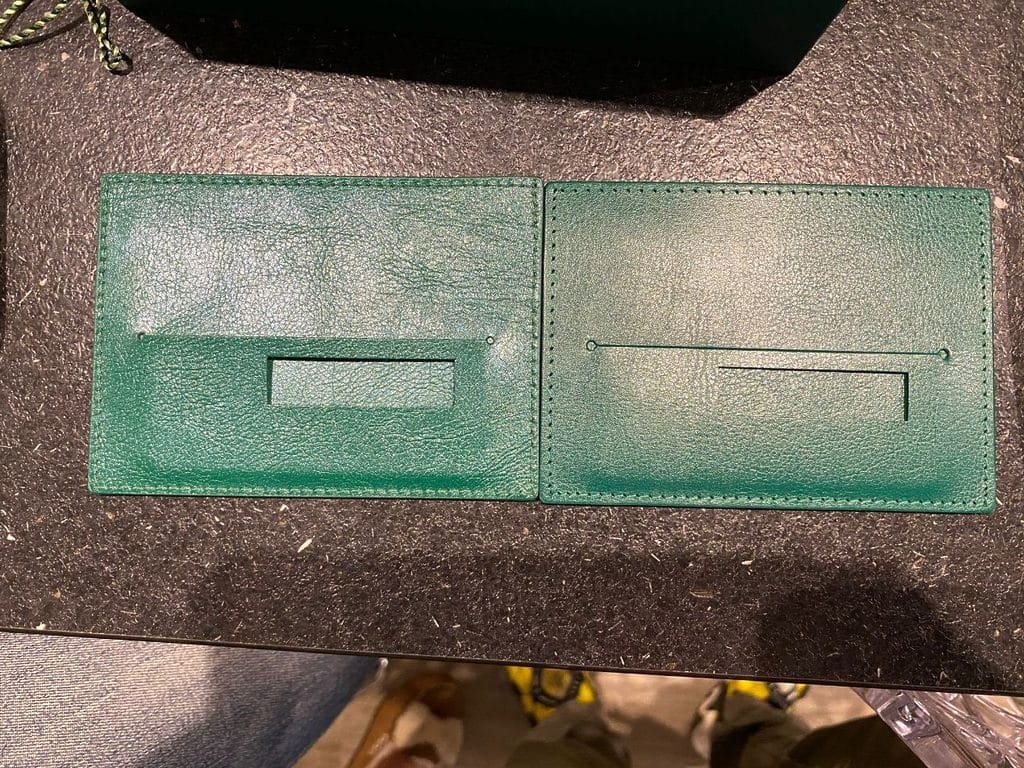
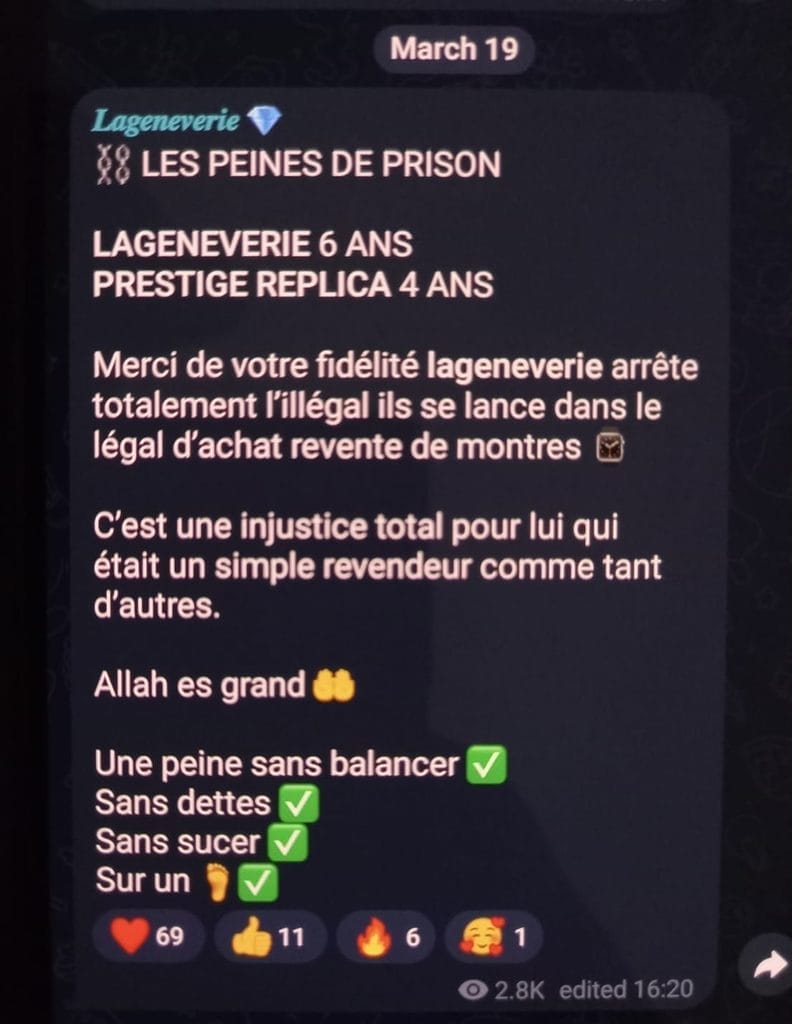
For the subjects that interest us most here at Passion Horlogère, namely the counterfeiting of luxury watches by La Genèverie and Prestige Watch Replica, here are the sentences handed down by the Court:
- Mr Florian REBANI, currently in pre-trial detention, is found guilty and sentenced to 4 years of firm imprisonment. Because of a previous sentence, an 8-month straight suspended sentence is revoked. The Court orders that he remain in detention. He is also banned from managing a company for 10 years, barred from standing for election for 3 years, and all his seized assets are confiscated. Under the Civil Action, he is ordered to pay total fines of €300,000 (against the €7 million sought by the public prosecution (Parquet) – Ed.).
- Mr Julien VINCENT, currently in pre-trial detention, is found guilty and sentenced to 4 years and 6 months of firm imprisonment, with continued detention. He is also banned from managing a company for 10 years, barred from standing for election for 3 years, and all his seized assets are confiscated. The Court orders the seizure of his villa in Thailand, or the proceeds of its sale or reuse. He will have to publish a statement in the print press in Le Figaro, and in the digital press for a period of one month on the Magmontres.fr website. Under the Civil Action, he is ordered to pay total fines of €208 million (against the €365 million sought by the public prosecution (Parquet) – Ed.), broken down as follows: €206 million for Customs, €1.87 million for Rolex, €50,000 for Chanel, Audemars Piguet, Patek Philippe, Richard Mille and Omega, €44,000 for Hublot, and €800 for Fred.
None of the defendants flinched as the verdicts were read out. They have 10 days to appeal the decision handed down by the Paris Judicial Court, as does the public prosecution (Ministère Public). We were able to exchange a few words with Maître Marie Violleau at the end of the trial; she considers the verdict a victory for her client, as the sentence handed down falls short of the public prosecution’s (Parquet) closing submissions. She believes her client will not appeal, but she cannot give a definitive answer immediately.
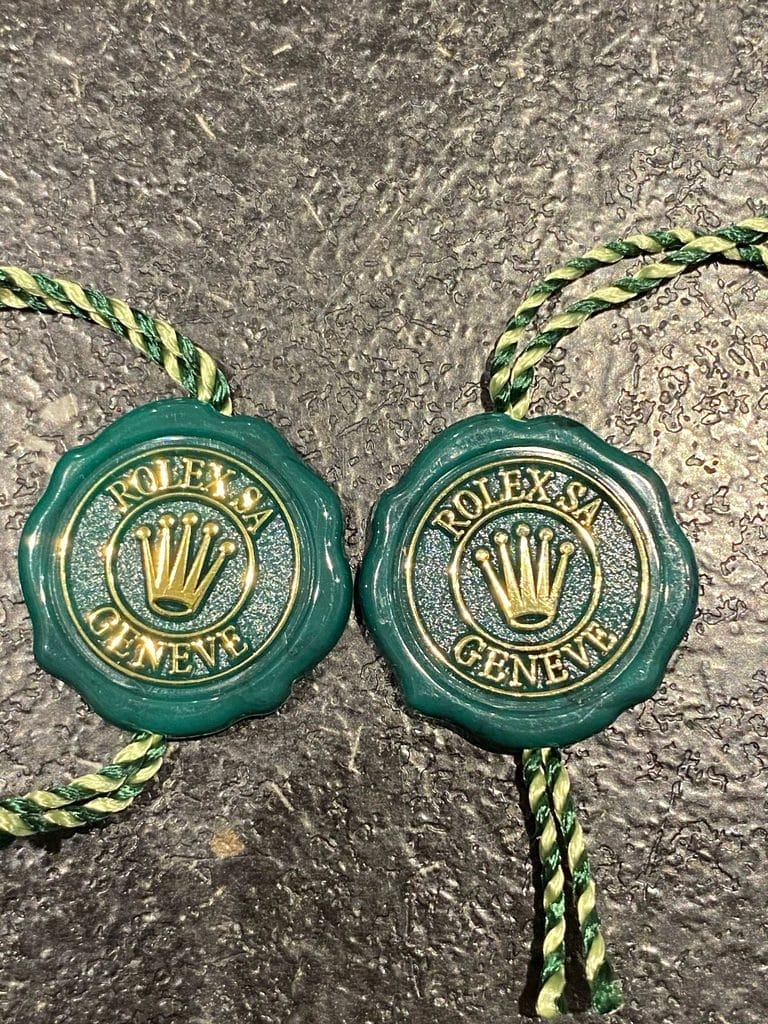
What should we take away from this trial?
Watch counterfeiting was only one part of this trial. This clearly shows that this type of trafficking is linked to many others. Assisting foreign nationals with irregular residence in France, forged documents, corruption of officials… and so on, all featured in the debates in our case. And ultimately, this organised-gang counterfeiting trafficking took a back seat, with only 3 days of hearings out of 10. Given the figures announced, thousands of watches sold and hundreds of millions in value, this may come as a surprise. Above all, it greatly surprised watch enthusiasts, who commented extensively on our posts on social media. But what could explain this lack of judicial interest in counterfeiting? Yet remember Customs’ advertising campaigns: buying a counterfeit can cost €300,000 and up to 3 years in prison. Yet here we were talking about at least 12,000 fake watches. The answer lies in the closing submissions of the public prosecutor: “We wish to point out that Julien VINCENT’s fraud only caused harm to the brands, and not a disturbance of public order.”
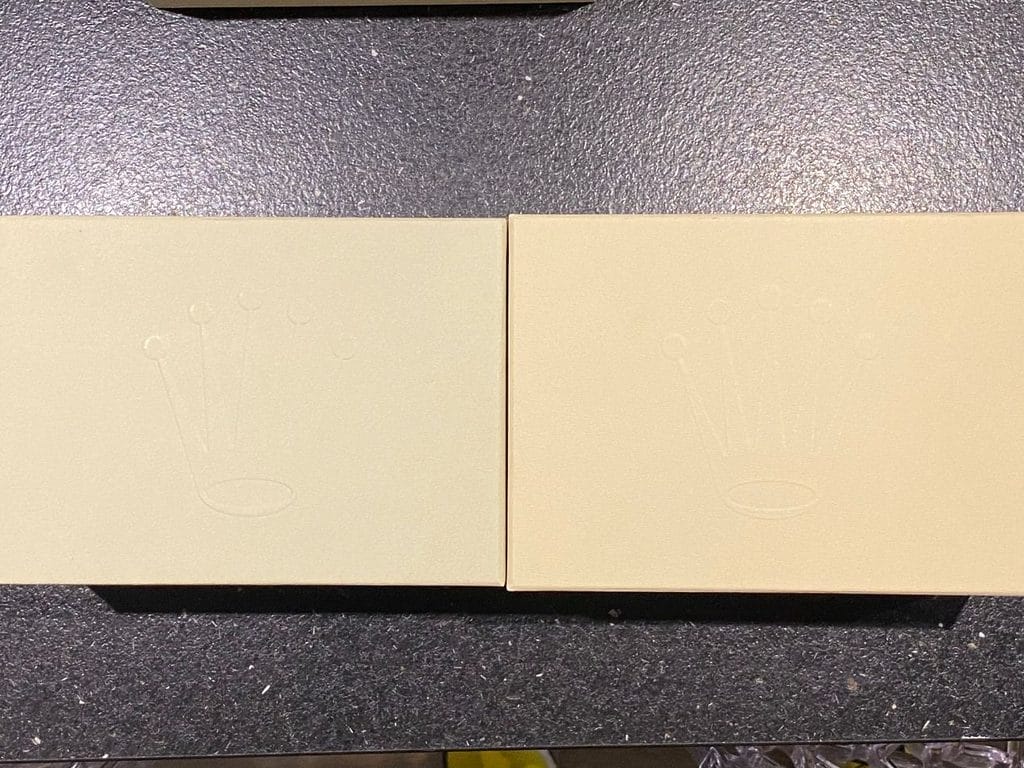
A ticking time bomb
It is true that the disturbance of public order is not obvious at the time of the trial. Among the civil parties, we saw only representatives of the counterfeited brands and the Customs administration. Not a single victim of Julien VINCENT or Florian REBANI! Not one person who bought one of these 12,000 watches. So where are these people? Perhaps they are not victims because they do not yet know it. We are not talking about people who knowingly bought a counterfeit from Prestige Replica or La Genèverie. We are talking about people who were deceived by Julien VINCENT’s resellers. Those who bought a watch on Vinted, Le Bon Coin, or elsewhere, believing it to be an authentic Rolex, Audemars Piguet, or Chanel… Why was not a single one of them present? There are two possible reasons for this. The first could be that investigators did not push the investigation far enough to try to identify them and thus inform them of the fraud of which they were victims. For lack of time, for lack of resources… Not knowing they were victims, and unaware of the ongoing proceedings, no one could come forward. The second, obvious reason, is that the watches purchased still work and do not require a trip to after-sales service. And, since around 80% of these are counterfeit Rolex watches, and given that the brand does not recommend a service before 10 years, no one has yet brought their counterfeit into the official Rolex network for a service. This is why this case is a ticking time bomb!
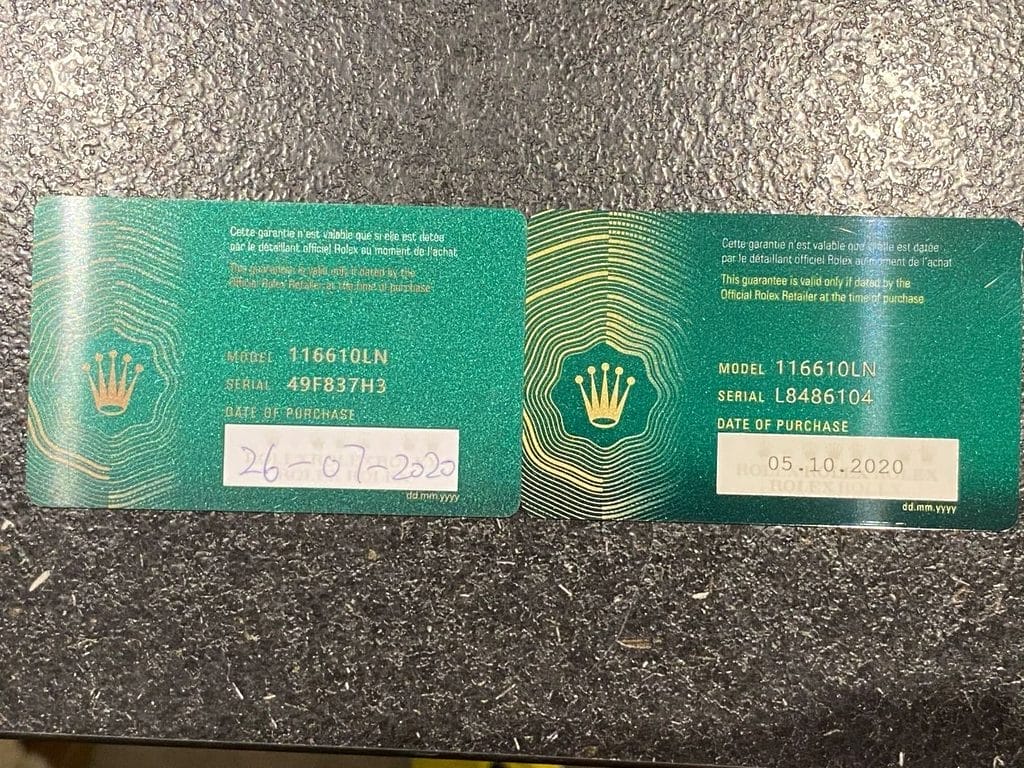
The Rolex doublettes
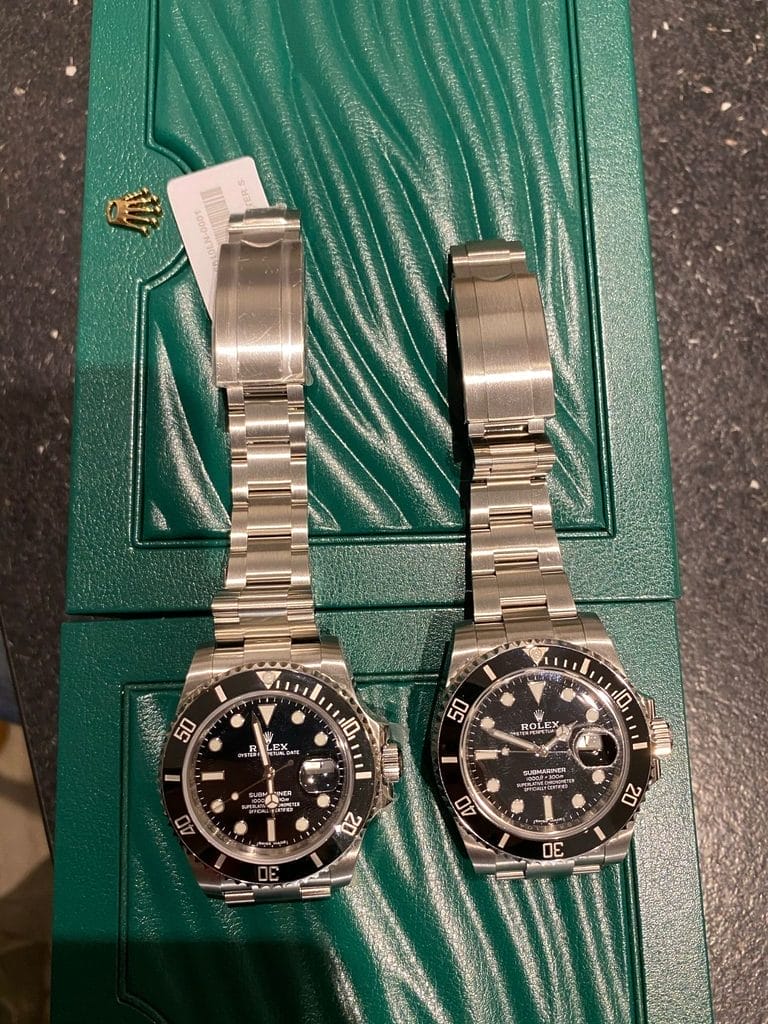
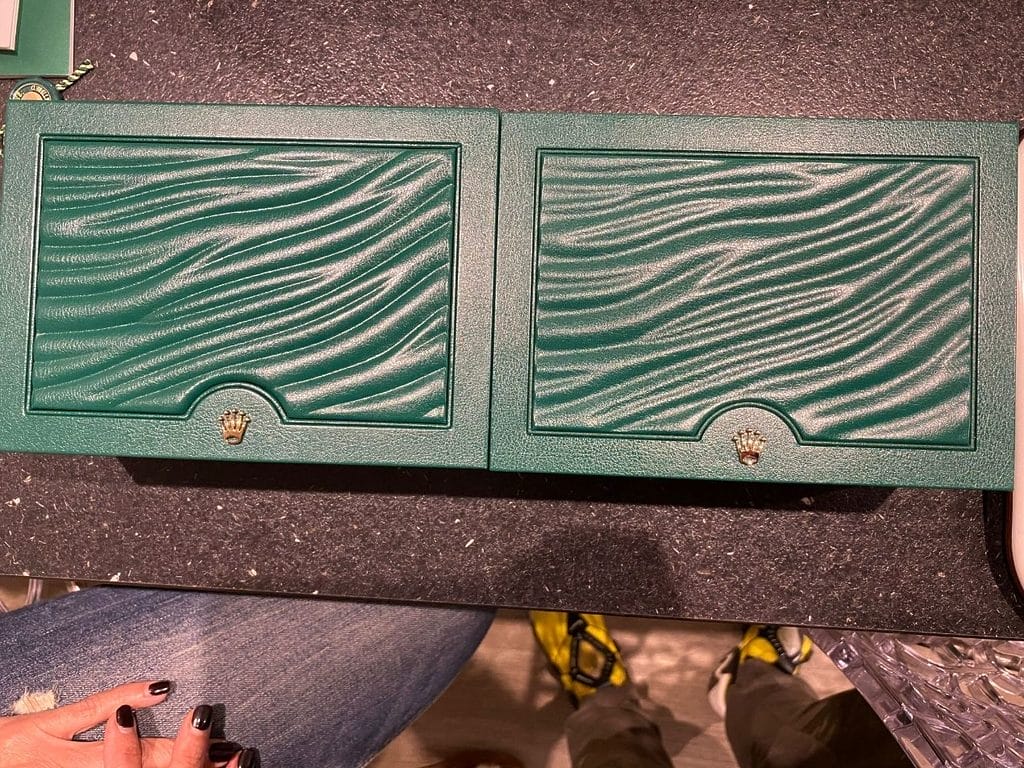
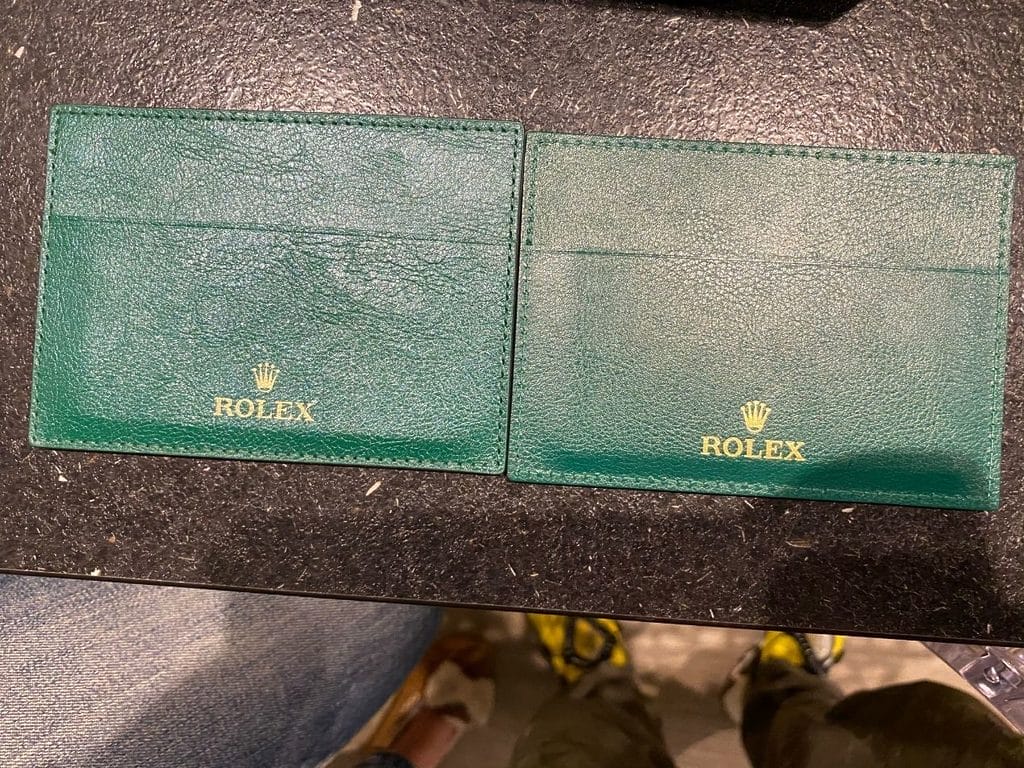
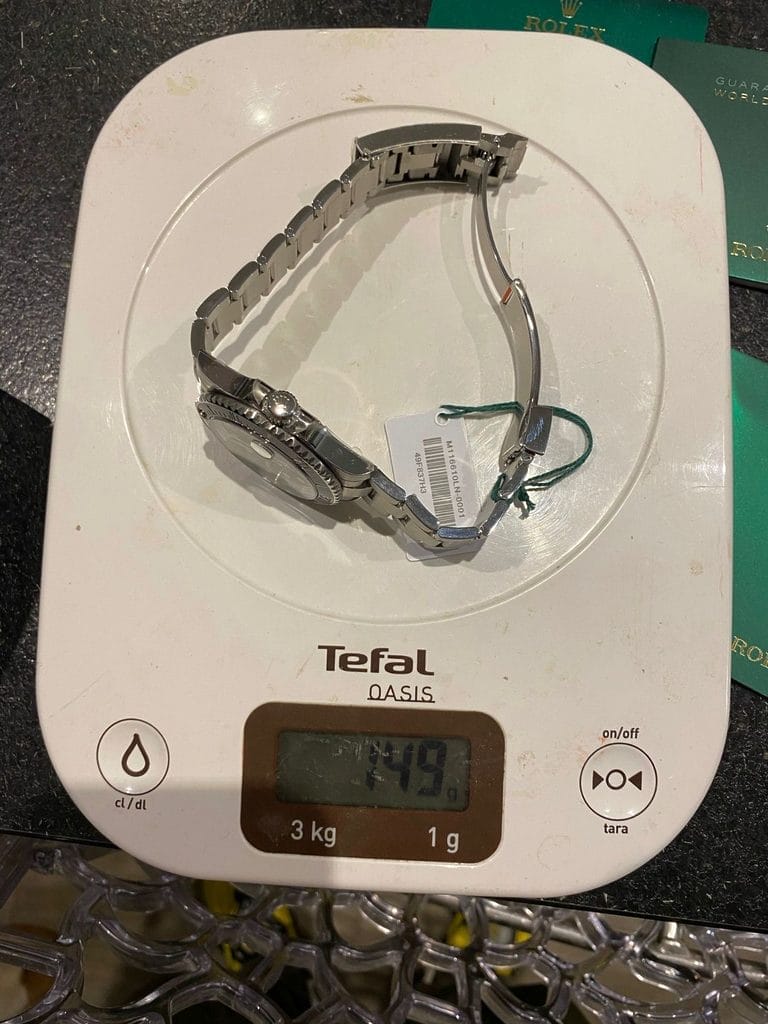
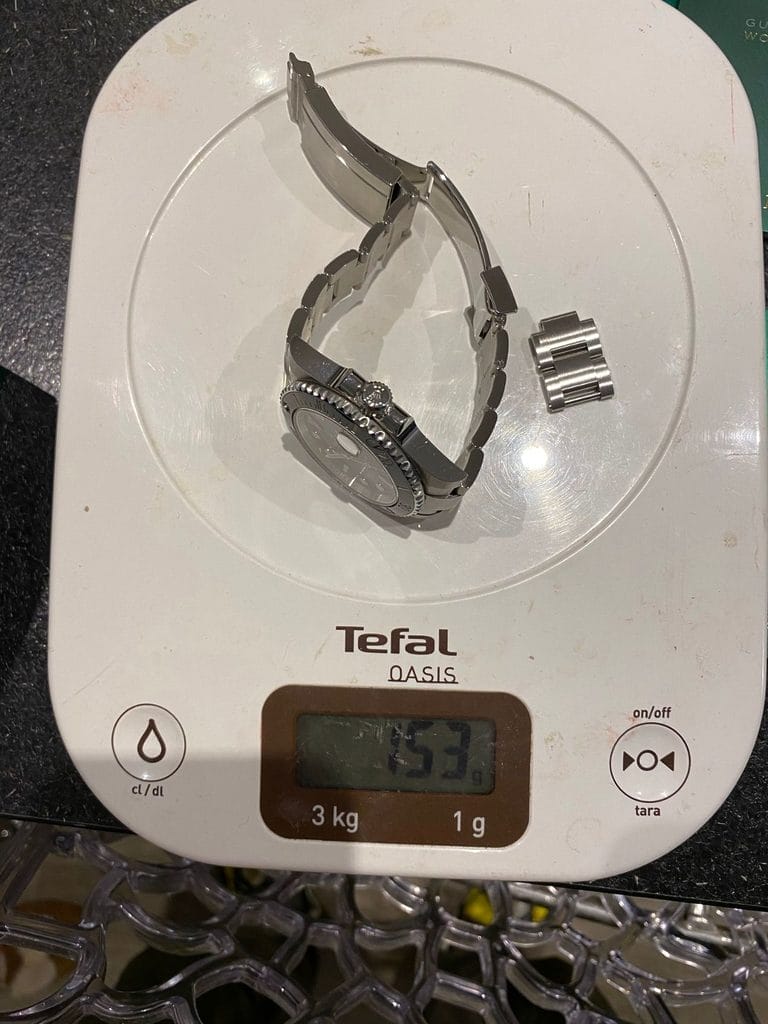
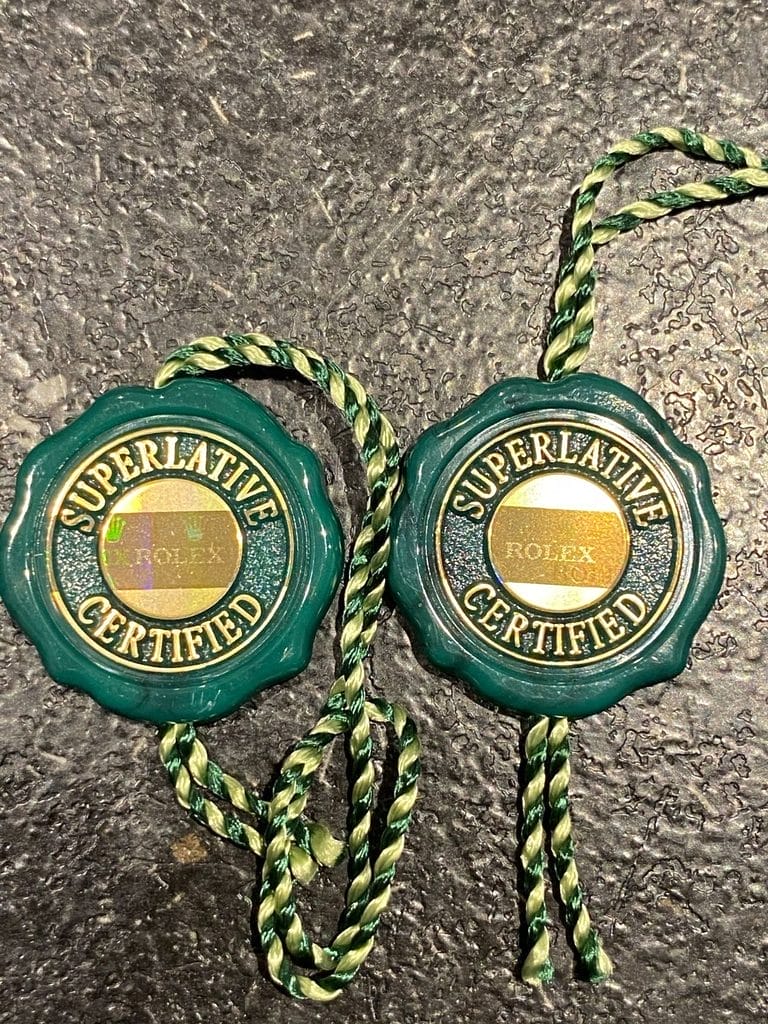
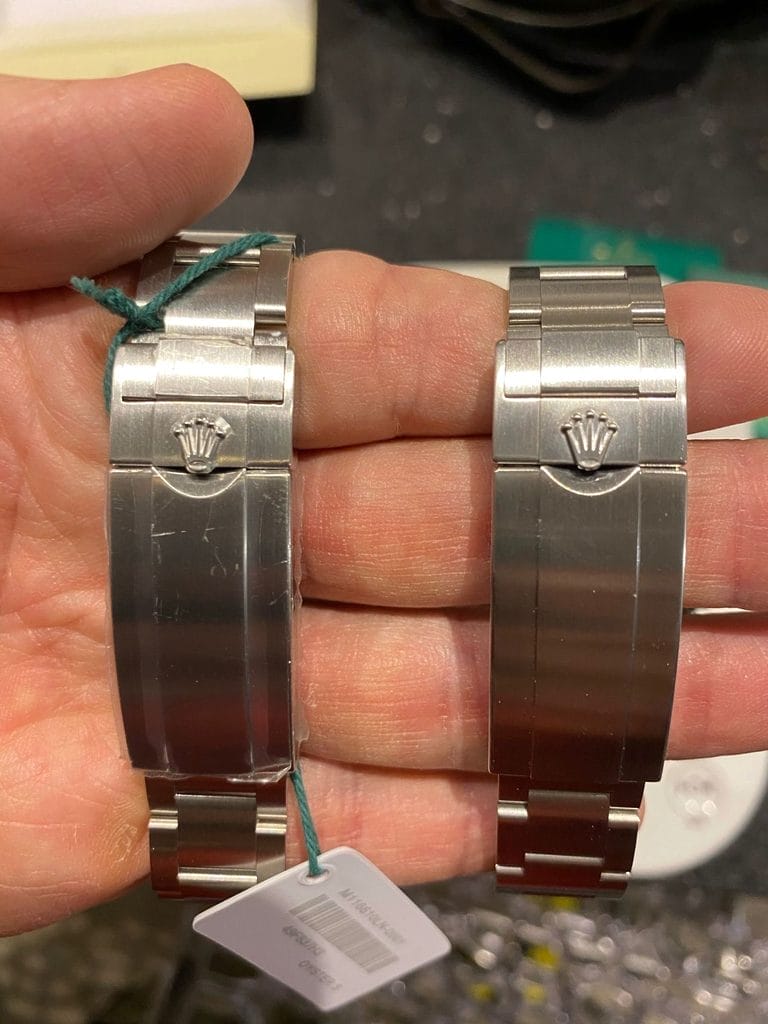
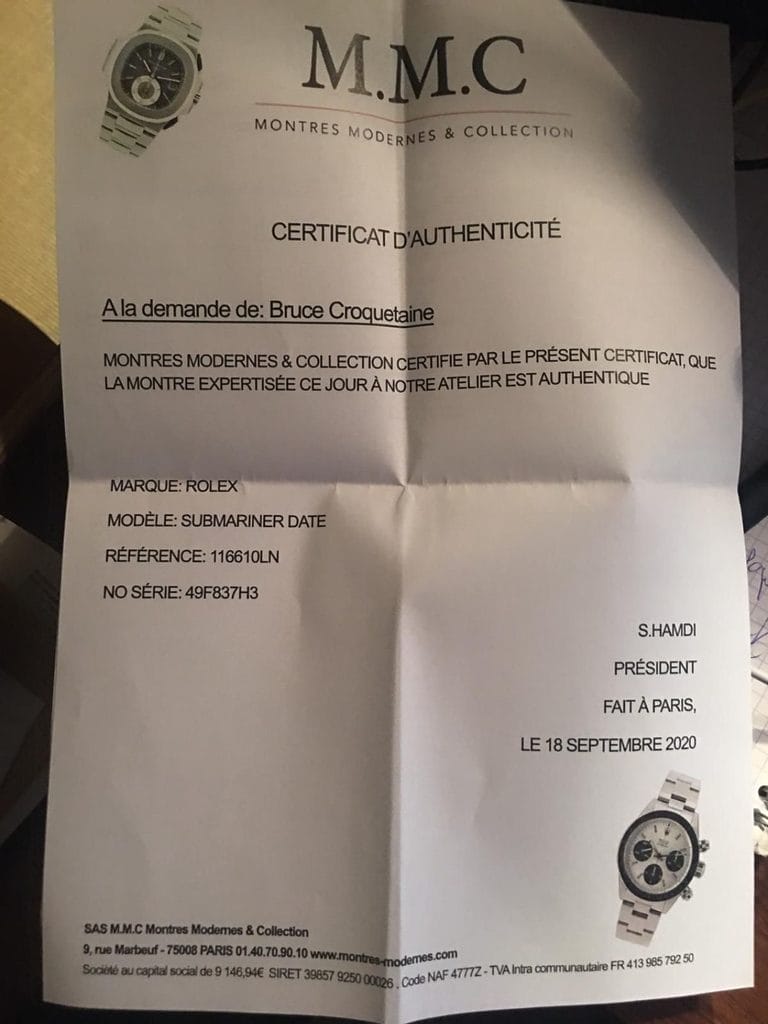
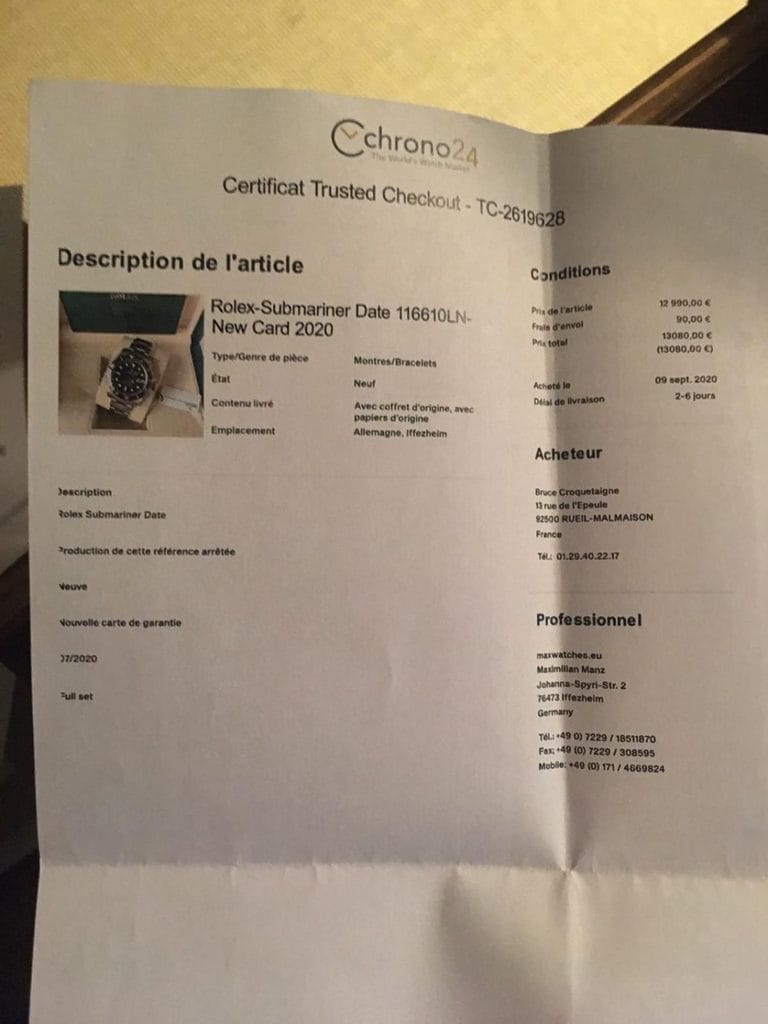
If you have followed this trial, you will have understood what is called a “doublette” in watchmaking terms. These are very well-made counterfeit watches bearing an authentic serial number. As Julien VINCENT and Florian REBANI explained, the doublettes were manufactured in batches. This means that at least 200 or 300 watches would carry the same serial number each time. Here is a list of serial numbers that was published by Michel Vittini on the Facebook group Club Rolex France listing serial numbers that had been observed on doublettes by watch dealers to whom they had been offered. According to the testimonies gathered, all these doublettes were attributed to Julien VINCENT:
1:116610LN:S76X4566
2:116610LN:9T7L8523
3:116610LN:41U760Z7
4:116610LN:T4344069
5:116610LN:7L32Y777
6:116610LN:93P4R100
7:126710BLRO: 8K4L635
8:126710BLNR:789G1176
9:116610LN:38ZY7097
10:116610LN:6M8Q24K2
11:116610LN:281Q52K6
12:116610LN:5K822140
13:116610LN:14QR2923
14:116610LN:Y7L27693
15:116610lLN:49F837H3
16:116610LN:0K97L154
17:126710BLNR:J15090Z8
18:116610LN:0H4K9991
19:116610LN:2R20X658
20:116610LN:Q9C82579
21:116610LN:01AW3716
22:116610LN:17R5R725
23:116500LN:45P2R526
24:116500LN:7K21L290
25:116610LN:C98211P9
26:116610LN:6893R122
27:116500LN:2C0079P4
28:116500LN:58C699G0
29: 116610LN:S19V2362
30:116500LN:26D7S2831
31:116500LN:10K90550
32:116610LV:7343U9N5
33:116610LV:8408U9N5
34:116500LN:416886R6 (black)
35:116610LV:1786U9N5
36:116500LN:802601J2
37:116610lv:1254U9N5
38:126610LN:9KX12779
There are 38 serial numbers in this non-exhaustive list. If we attribute to each number the minimum batch size of 200 doublettes, we arrive at a figure of 7,600 doublettes. Given that doublettes were the least sold of the watches by the counterfeiters, this brings us back to questioning the figure of 12,000 watches mentioned. Some sources speak of far more. Far, far more. There are fairly well-informed people who speak of a minimum of 55,000 watches and tens of millions in turnover. The scale of the harm therefore becomes much greater in light of these dizzying figures.
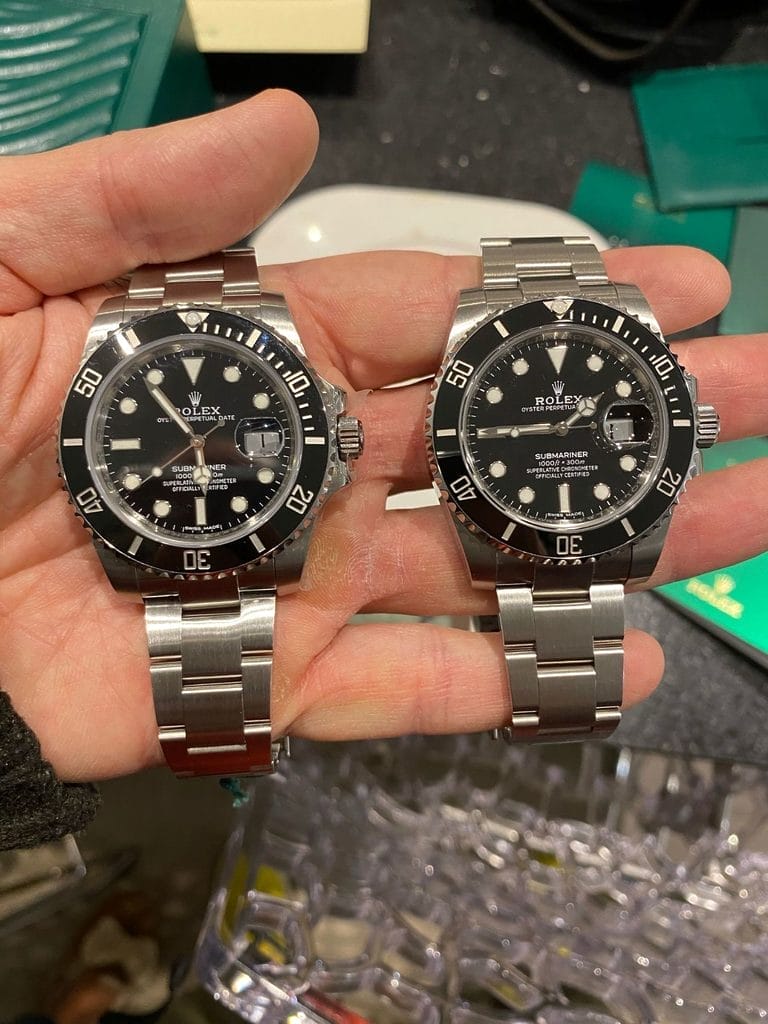
How can we combat the future effects of this watch counterfeiting?
Today, and especially tomorrow, the problem of the consequences of all these watches on the market will arise. And it is at that point that the famous “disturbance of public order,” which did not exist, according to the public prosecution (Ministère Public), at the time of the trial, will most likely appear. And here we have a heartfelt thought for the victims, but also for our watchmaker friends who will have to deal with these issues face to face with the deceived owners. Complaints will pour in. Outbursts of anger will be legion. And it is a safe bet that scandals, or even confrontations, will crop up here and there in the hushed showrooms of our favourite watch retailers. To avoid this, and to help these poor watchmakers who will have to be the bearers of bad news, it is important to put in place procedures that are perfectly organised and, above all, lawful. There can be no question of asking watchmakers to seize the counterfeit watch. This would be illegal. Because in France, only a judicial authority, a judicial police officer (OPJ), or a customs officer can order a seizure. No watchmaker, however certain they may be of the counterfeit nature of a watch in front of them, can dispossess its owner of it without this being considered outright theft. Brands facing this ticking time bomb must therefore anticipate these problems to come.
What solutions exist today?
Today we are still poorly equipped to prevent the counterfeiting of luxury watches. There are indeed initiatives, but they remain isolated. On the brands’ side, we have, for example, Awake or Carl F. Bucherer, which have integrated electronic or holographic systems allowing their watches to be verified as authentic and recorded on a blockchain. But let’s not kid ourselves, these brands are not the ones most affected by the counterfeiting problem.
The real question, let’s not beat around the bush, is what Rolex is offering to combat counterfeiting. Well, Rolex has already begun providing solutions. Beyond the high quality of its products, which are very difficult to imitate, there is the introduction, since 1st December 2022, of the RCPO, a first step in response to the scourge of counterfeiting. For what better way to avoid buying a fake than to buy a genuine Rolex? Obviously, you either buy it new, if you can wait long enough on one of those famous retailer waiting lists, or you buy it second-hand through the Rolex Certified Pre-Owned network. In this network, every watch passes through the hands of Rolex-qualified watchmakers to earn the RCPO label.
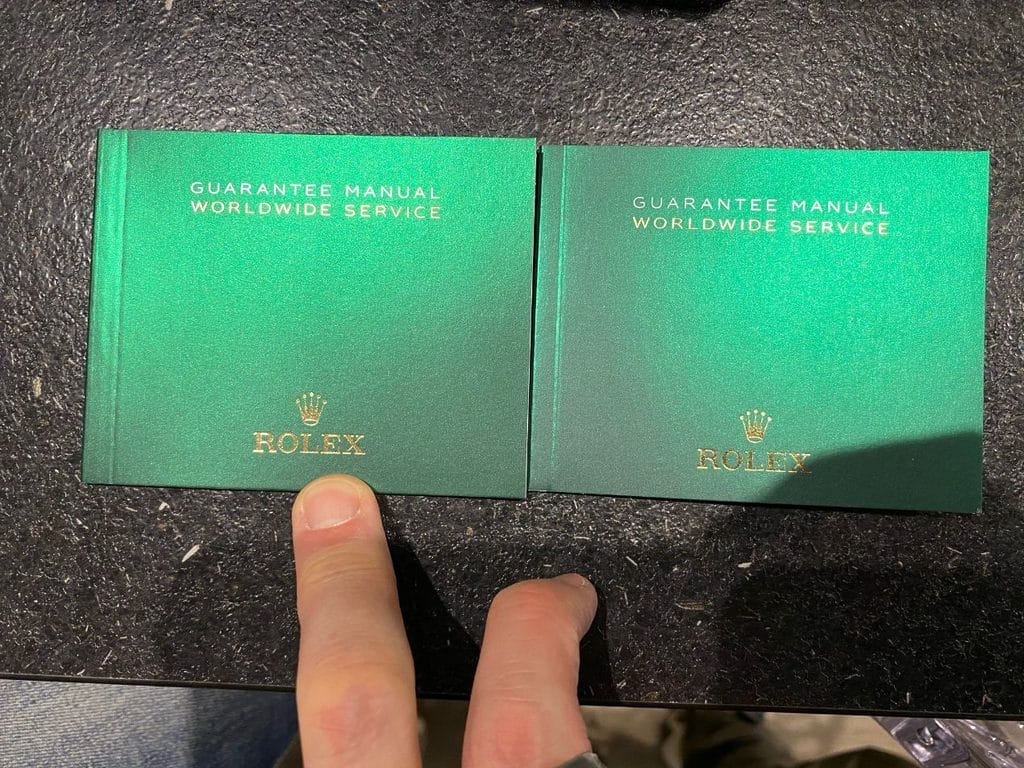
Of course, if you would rather not go through these solutions, there is always the option of buying your watch from a professional dealer whose reputation precedes them. On the Facebook group Club Rolex France we very regularly see extremely positive feedback about Michel Vittini. And on that basis, we do not hesitate to highlight him in a wholly independent capacity. Serious, trustworthy people deserve to be talked about!
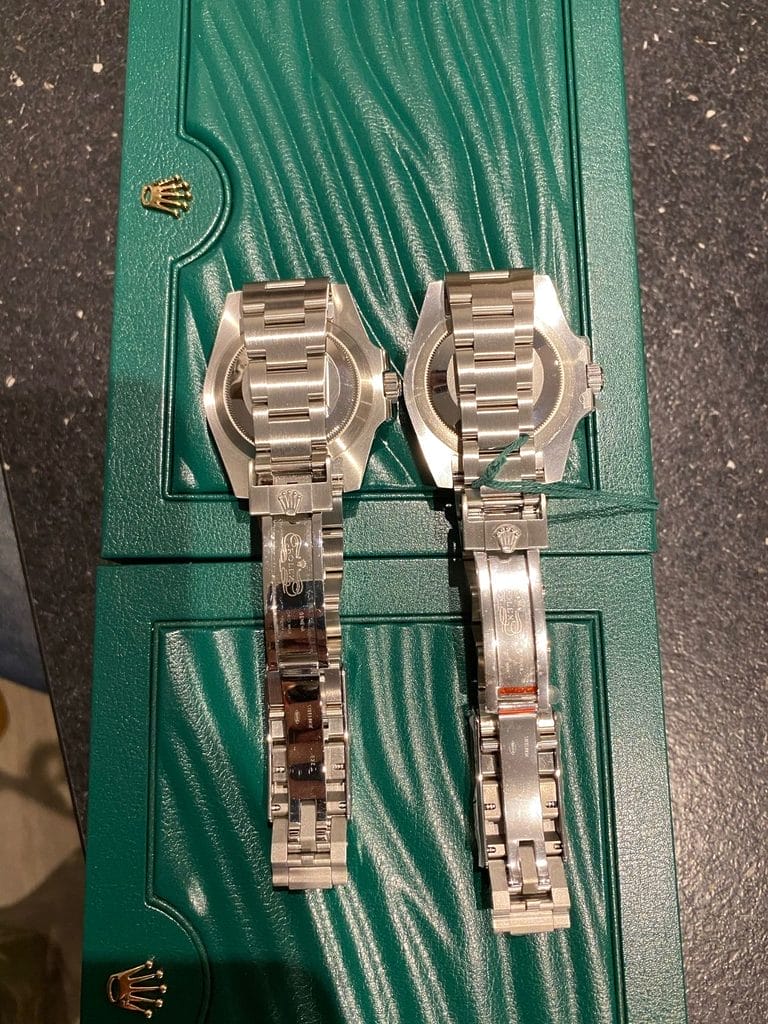
What other solution for a safer future?
We have been given unofficial information indicating that the Ministry of the Interior and the Ministry of the Economy and Finance have, for some years now, taken up the subject of “luxury watches.” A solution is reportedly under study to address three problems: a tax problem resulting from watch speculation, with enormous undeclared capital gains being accumulated; the problem of increasingly frequent and violent watch thefts; and the problem of counterfeiting. To address this, state authorities are said to be examining a requirement for traceability and a title of ownership to accompany watches, jewellery, and other luxury items. This could be imposed on this type of goods above a value threshold still to be defined. In doing so, every luxury watch would be accompanied by a sort of “registration document” that would follow it throughout its life and, above all, would allow the maintenance of a register, tracking of every change of ownership, and, of course, tax revenue. France, the inventor of VAT in 1954, would once again be at the cutting edge of fiscal creativity. It is a safe bet that if the brands do not respond with a universal system, lawmakers will take up the issue and impose one on them without hesitation.
This Prestige Watch Replica and La Genèverie case is far from finished sending out aftershocks, like an earthquake whose full scale none of those involved appear to have yet grasped. Beyond the “mere” trafficking of counterfeit watches, considerable stakes for the luxury world are looming. Let us hope that the main players in this sector, whether Swiss, French, or international, know how to respond, and that they are supported by institutional bodies such as the Comité Colbert, the Fédération de l’Industrie Horlogère Suisse (Swiss Watch Industry Federation, FH), or the Comité Francéclat.
Frequently asked questions
Julien VINCENT was ordered to pay total civil fines of €208 million, while Florian REBANI was ordered to pay €300,000.
Julien VINCENT was sentenced to 4 years and 6 months of firm imprisonment with continued detention, and Florian REBANI to 4 years of firm imprisonment, also with continued detention.
A doublette is a very well-made counterfeit watch bearing an authentic serial number; according to testimony, these were manufactured in batches of at least 200 to 300 units sharing the same serial number.
The public prosecution argued that Julien VINCENT’s fraud caused harm only to the brands, not to public order, partly because no buyer of the fake watches had come forward as a victim.
Options under discussion include Rolex’s Certified Pre-Owned (RCPO) programme, buying from reputable dealers such as Michel Vittini, and a possible French government requirement for a traceable title of ownership for luxury watches.
- Part 1: Setting the scene
- Part 2: Chronology of the facts
- Part 3: Getting to the heart of the matter
- Part 4: The hidden money
- Part 5: The Punch and Judy show
- Part 6: A calmer hearing
- Part 7: Rolex’s conclusions
- Part 8: Material and moral harm to the brands
- Part 9: Customs and the public prosecution step in
- Part 10: The defence’s pleading
- Part 11: The verdict (208 million euro) ←

Leave a Reply